By the end of this chapter, you should be able to:
Explain the difference between Artificial Intelligence (AI), Machine Learning (ML), and Deep Learning (DL)
Describe what machine learning is and when it is appropriate to use ML-based solutions.
Briefly describe supervised learning.
Differentiate between traditional programming and machine learning.
Evaluate whether a machine learning solution is suitable for your problem or whether a rule-based or human-expert solution is more appropriate.
Show imports and setup
from pathlib import Pathimport numpy as npimport pandas as pdimport matplotlib.pyplot as pltimport osimport syssys.path.append(os.path.join(os.path.abspath("."), "code"))from IPython.display import HTML, displayfrom sklearn.feature_extraction.text import CountVectorizerfrom sklearn.linear_model import LogisticRegressionfrom sklearn.model_selection import train_test_splitfrom sklearn.pipeline import make_pipelinefrom img_classify import classify_imageplt.rcParams["font.size"] =16pd.set_option("display.max_colwidth", 200)%matplotlib inlineDATA_DIR = Path("data")
Meet Eva, a fictitious student
Eva may have a lot in common with you. She has some Python experience and has heard machine learning discussed as a buzzword. During a recent internship, she encountered a messy problem that seemed as though it might benefit from ML. But she did not know how to tell whether ML was the right tool, what data she would need, or whether she could trust the result.
Eva is curious and asks many questions. We will return to her questions throughout the book as she learns to move from a real-world problem to a responsible ML prototype.
What are AI, ML, and DL?
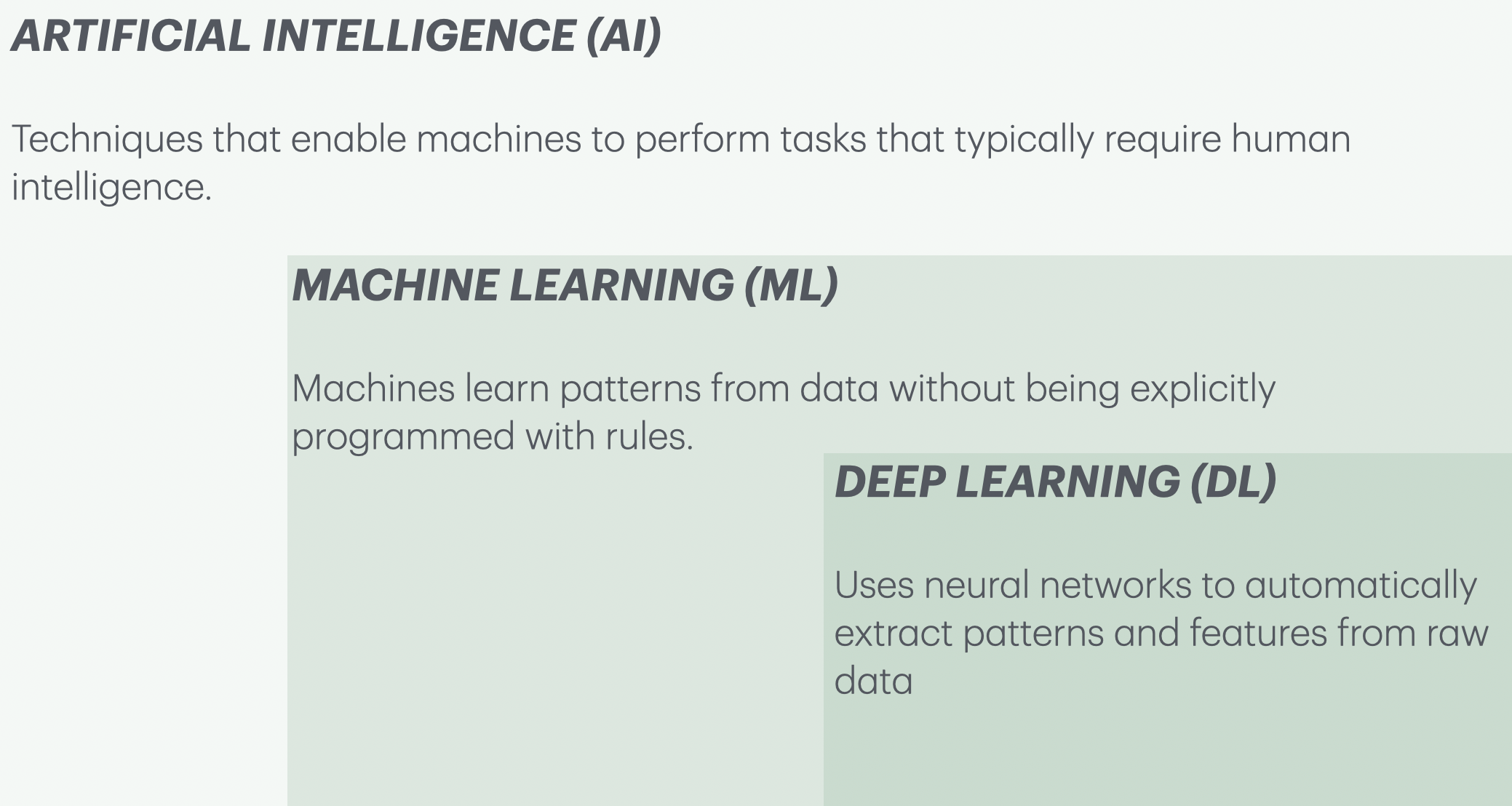
To begin opening the black box, let’s distinguish three terms you have probably heard: AI, ML, and DL.
Artificial Intelligence (AI): Helps computers make predictions or decisions when there isn’t a simple set of rules. Examples:Deep Blue, early spell checkers
Machine Learning (ML): A subset of AI where systems learn patterns from data instead of being explicitly programmed. Examples: Spam filtering in Gmail
Deep Learning (DL): A subset of ML that uses multi-layered neural networks to learn complex patterns. Examples: image classification, speech-to-text
In this course, we’ll focus on machine learning, the practical, everyday workhorse of AI. Toward the end, you’ll also get a high-level overview of deep learning, the driver behind recent breakthroughs in generative AI.
Machine learning is especially useful when we have many examples and expect useful patterns in them, but the relationship is too complicated and noisy to express as a reliable set of hand-written rules. Image recognition, spam filtering, and personalized recommendations all have this character.
ML is not automatically the right tool for every problem:
Use explicit rules when the logic is known, stable, and deterministic.
Use human judgment when the task depends heavily on context, empathy, values, or accountability.
Consider machine learning when useful rules are difficult to specify but representative data and a meaningful way to evaluate errors are available.
Real systems often combine all three. Before building a model, we should ask what role (if any) ML ought to play and what the consequences of its mistakes would be.
The big idea
Many modern AI systems are not magic. They learn patterns from examples.
Let’s build some intuition for this idea before describing it formally.
Learning patterns in images
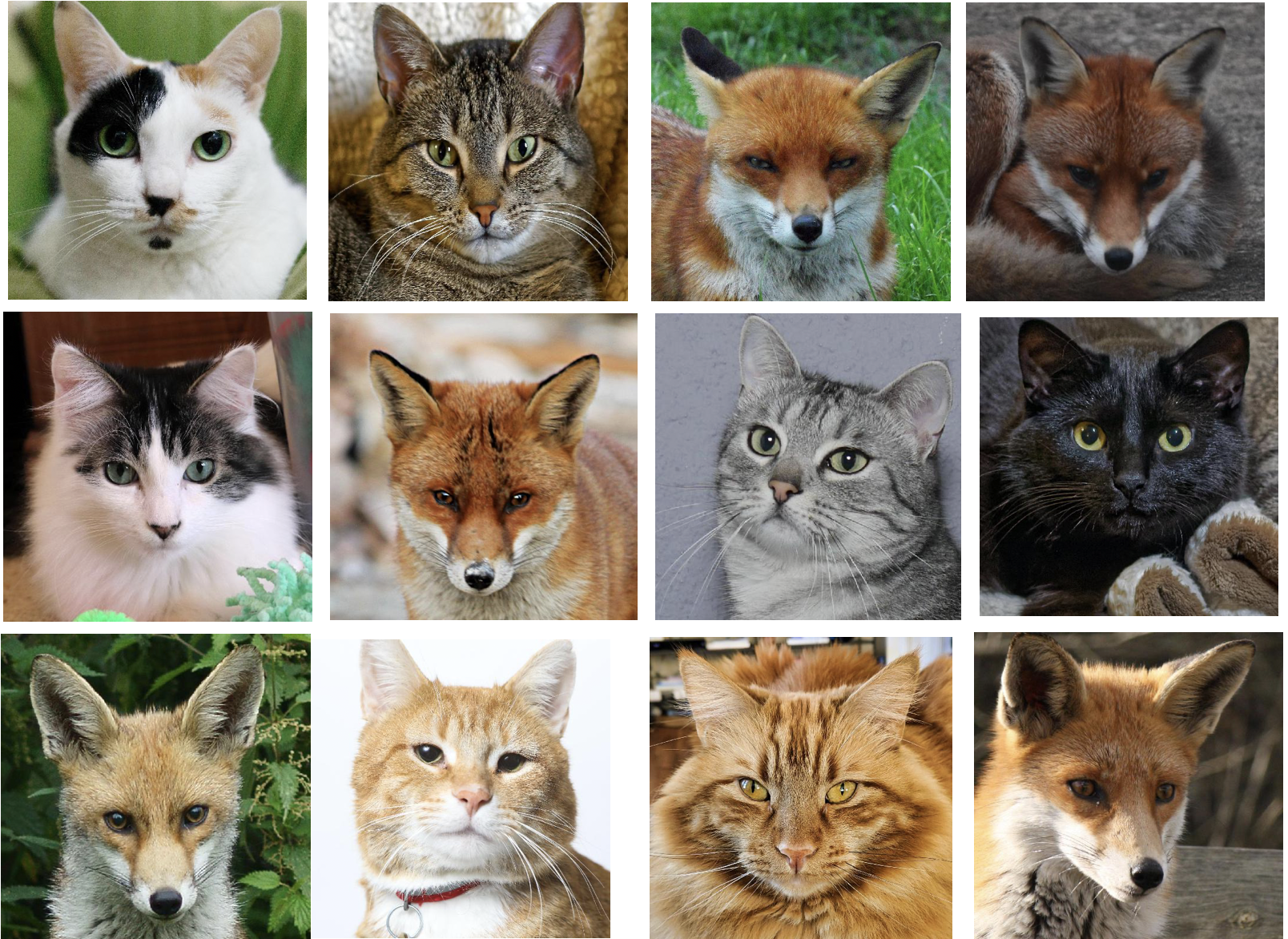
Imagine that we want to write a program that can tell cats and foxes apart. What patterns might help?
Image ID
Whiskers Present
Ear Size
Face Shape
Fur Color
Eye Shape
Label
1
Yes
Large
Round
Mixed
Round
Cat
2
Yes
Medium
Round
Brown
Almond
Cat
3
Yes
Large
Pointed
Red
Narrow
Fox
4
Yes
Large
Pointed
Red
Narrow
Fox
5
Yes
Small
Round
Mixed
Round
Cat
6
Yes
Large
Pointed
Red
Narrow
Fox
7
Yes
Small
Round
Grey
Round
Cat
8
Yes
Small
Round
Black
Round
Cat
9
Yes
Large
Pointed
Red
Narrow
Fox
Which patterns would you use to classify a new image?
In this small dataset, fur colour, face shape, and eye shape seem informative: the foxes have red fur, pointed faces, and narrow eyes, whereas the cats tend to have non-red fur and rounder faces and eyes. Whiskers are not informative here because every example has them; a feature that does not vary cannot help distinguish the two classes. Ear size may provide some information, but it does not separate the classes perfectly because some cats also have large ears.
These are patterns in the observed examples, not universal rules about all cats and foxes. More varied data could reveal exceptions or different useful patterns.
Note
The table uses human-interpretable features to develop intuition. Modern image classifiers usually learn useful representations directly from pixel values.
Learning patterns in preferences
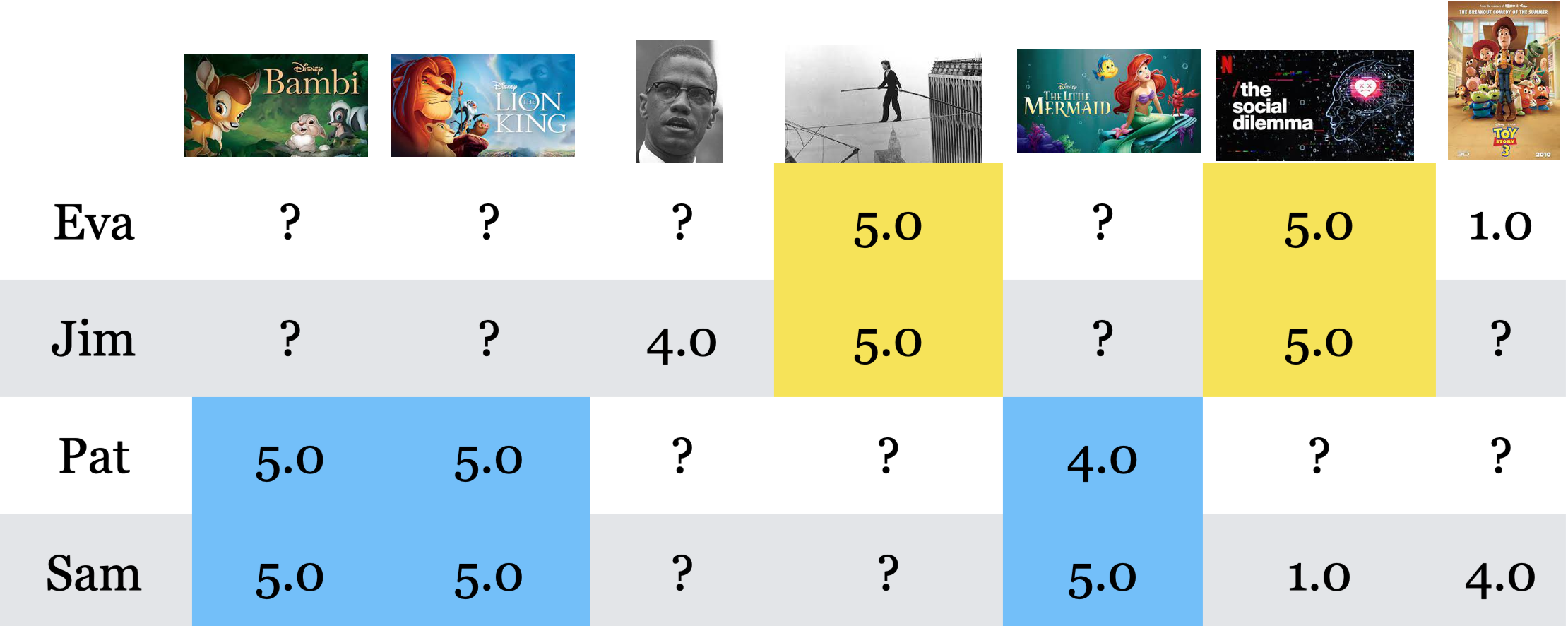
Imagine that you want to recommend a movie to Pat. Based on these examples, what would you recommend?
What pattern connects Sam’s and Pat’s preferences? How confident are you in your recommendation?
Sam and Pat both rate The Lion King, The Little Mermaid, and Bambi highly, suggesting that their movie preferences may be similar. Because Sam also likes Toy Story, it could be a reasonable recommendation for Pat. This is the basic intuition behind collaborative filtering: interactions from people with similar preferences can help fill in a missing preference. Recommendation systems often combine this idea with information about the items or users, so they do not fit neatly into only one learning category.
Our confidence should be limited, however: the pattern is based on only a few overlapping ratings, and we know very little about the other factors that shape either person’s preferences.
Learning patterns in language
Suppose you are given these examples. How would you build a spam detector?
Message
Spam?
🎉 CONGRATULATIONS! YOU WON $1000!
✓
Your package has shipped
✗
Assignment due tomorrow
✗
YOU WON A FREE PRIZE 🎁!
✓
Dinner tonight?
✗
Can we meet at 3 PM?
✗
What patterns do you notice?
Which patterns might be misleading?
How would you test whether your detector works on new messages?
In these examples, spam is associated with phrases such as “YOU WON” and “FREE PRIZE,” mentions of money, celebratory emoji, and extensive capitalization. The non-spam messages use more ordinary conversational or informational language. These cues may help on this dataset, but none is a universal rule: legitimate promotions can mention prizes, and genuine messages can use capital letters or emoji. A reliable detector would need more varied examples and evaluation on messages it did not learn from.
Learning patterns without labels
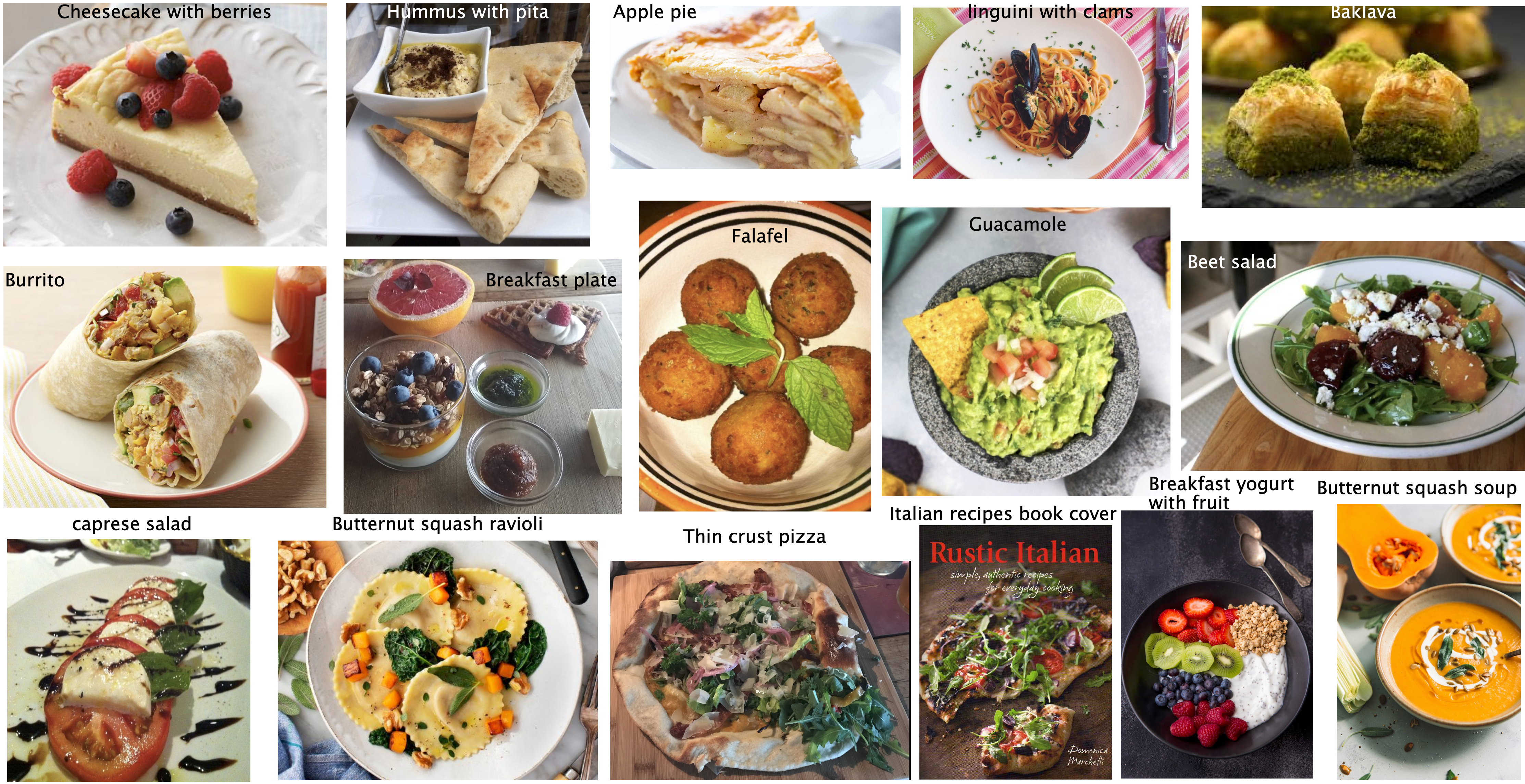
Suppose we have a large collection of food photographs but no category labels. How might you organize these images into useful groups?
A clustering method looks for groups of similar examples without being told the correct group for each image. To do this, we first need a numerical representation of each image, perhaps features learned by a neural network, and a way to describe which representations are similar. The method might then group foods by visual appearance, ingredients, cuisine, or some other pattern encoded by that representation. Unlike cat-versus-fox classification, there is no supplied target label and often no single correct grouping.
The resulting clusters do not explain themselves. People must examine and interpret them—and check whether the discovered grouping is useful or merely reflects incidental features such as plate colour, lighting, or background.
One recurring idea
These systems all learn from examples:
Image classifiers learn patterns in visual information.
Recommenders learn patterns in preferences and interactions.
Spam filters learn patterns in language.
Clustering methods look for structure among examples that do not have labels.
The data and methods differ, but the goal is similar: learn from observed examples and generalize to new cases.
Caution
A learned pattern is not necessarily meaningful or reliable. It may reflect accidents or biases in the training data.
A map of the course
The course studies several ways of learning from data and follows them through the broader problem-solving workflow.
Course component
Guiding question
Examples
Supervised learning
Can labeled examples help us predict a target for a new case?
What structure or preferences can we discover when the desired answer is not directly supplied?
Clustering foods or customers, recommending movies
Different kinds of data
How should the representation and method change with the data?
Images, text, time series, and right-censored data
Communication, ethics, and deployment
Does the system serve the real-world goal, and how should we describe and monitor its limitations?
Error analysis, fairness, explanations, deployment and monitoring
We will begin with supervised learning because it provides a concrete setting in which to introduce the vocabulary, workflow, and evaluation habits that recur throughout the course.
Supervised machine learning
What is supervised machine learning (ML)?
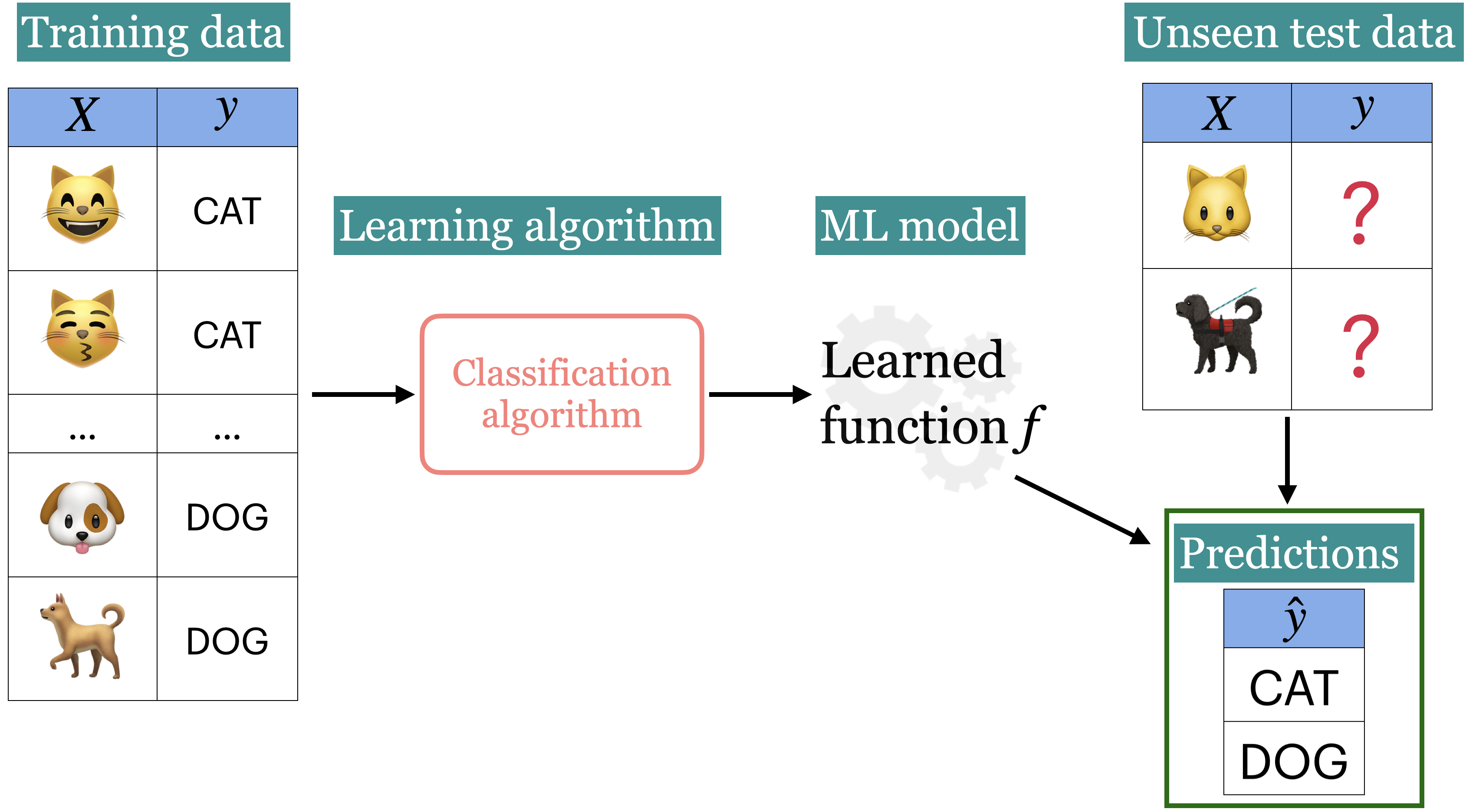
Training data comprises a set of observations (\(X\)) and their corresponding targets (\(y\)).
We wish to find a model function \(f\) that relates \(X\) to \(y\).
We use the model function to predict targets of new examples.
LookAtMe!: Thanks for your purchase of a video clip from LookAtMe!, you've been charged 35p. Think you can do better? Why not send a video in a MMSto 32323.
ham
Aight, I'll hit you up when I get some cash
ham
Don no da:)whats you plan?
ham
Going to take your babe out ?
ham
No need lar. Jus testing e phone card. Dunno network not gd i thk. Me waiting 4 my sis 2 finish bathing so i can bathe. Dun disturb u liao u cleaning ur room.
Funny fact Nobody teaches volcanoes 2 erupt, tsunamis 2 arise, hurricanes 2 sway aroundn no 1 teaches hw 2 choose a wife Natural disasters just happens
944
I sent my scores to sophas and i had to do secondary application for a few schools. I think if you are thinking of applying, do a research on cost also. Contact joke ogunrinde, her school is one m...
1044
We know someone who you know that fancies you. Call 09058097218 to find out who. POBox 6, LS15HB 150p
2484
Only if you promise your getting out as SOON as you can. And you'll text me in the morning to let me know you made it in ok.
Funny fact Nobody teaches volcanoes 2 erupt, tsunamis 2 arise, hurricanes 2 sway aroundn no 1 teaches hw 2 choose a wife Natural disasters just happens
ham
944
I sent my scores to sophas and i had to do secondary application for a few schools. I think if you are thinking of applying, do a research on cost also. Contact joke ogunrinde, her school is one me the less expensive ones
ham
1044
We know someone who you know that fancies you. Call 09058097218 to find out who. POBox 6, LS15HB 150p
spam
2484
Only if you promise your getting out as SOON as you can. And you'll text me in the morning to let me know you made it in ok.
ham
We have accurately predicted labels for the unseen text messages above!
(Supervised) machine learning: popular definition
A field of study that gives computers the ability to learn without being explicitly programmed. – Arthur Samuel (1959)
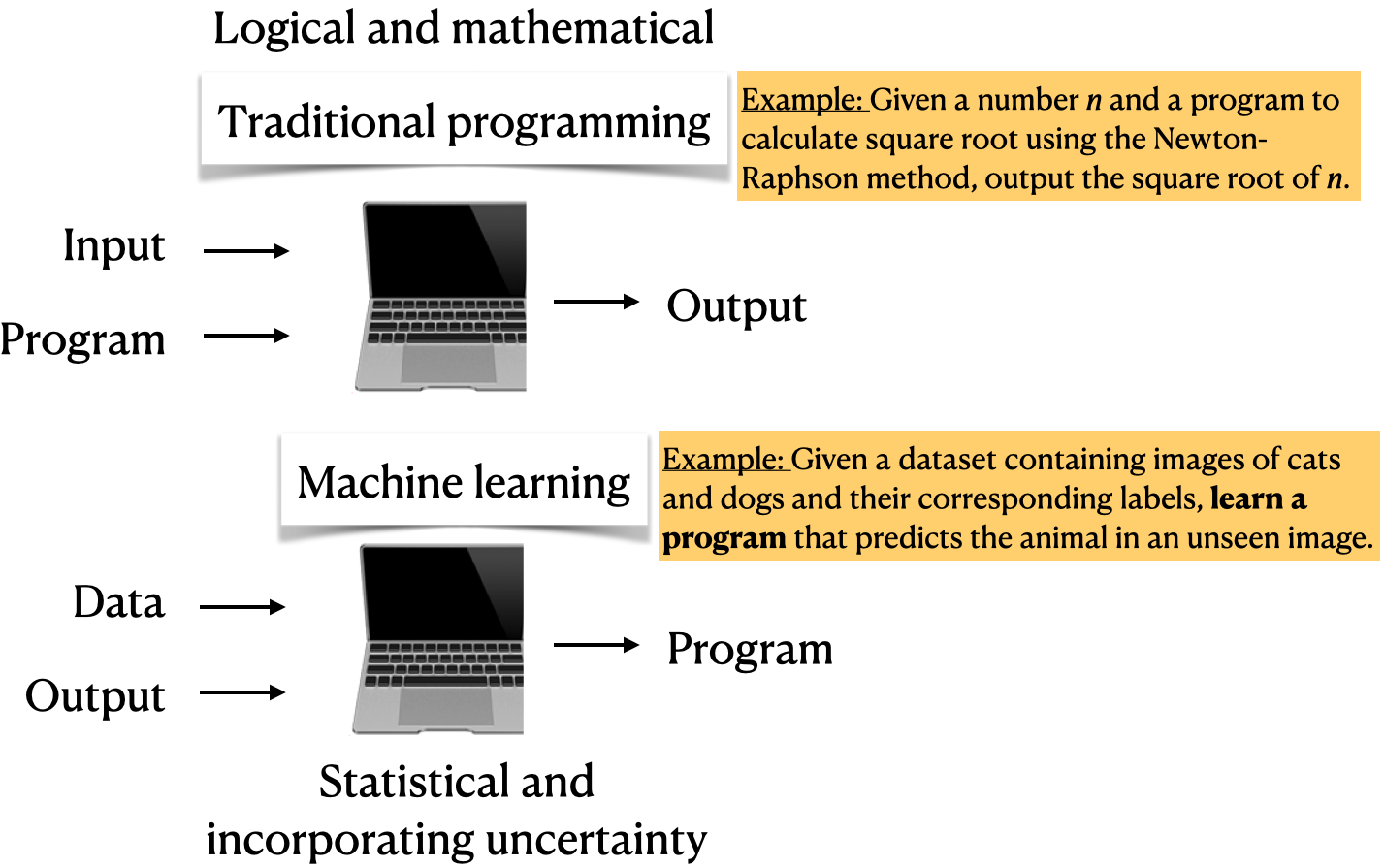
ML is a different way to think about problem solving.
Examples
Let’s look at some concrete examples of supervised machine learning.
Note
Do not worry about the code at this point. Just focus on the input and output in each example.
Example 1: Predicting whether a patient has a liver disease or not
Input data
Suppose we are interested in predicting whether a patient has the disease or not. We are given some tabular data with inputs and outputs of liver patients, as shown below. The data contains a number of input features and a special column called “Target” which is the output we are interested in predicting.
In a Jupyter environment, please rerun this cell to show the HTML representation or trust the notebook. On GitHub, the HTML representation is unable to render, please try loading this page with nbviewer.org.
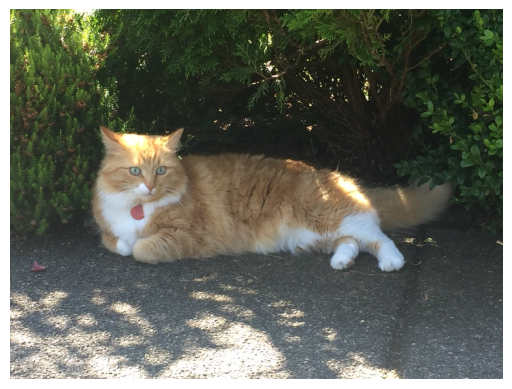
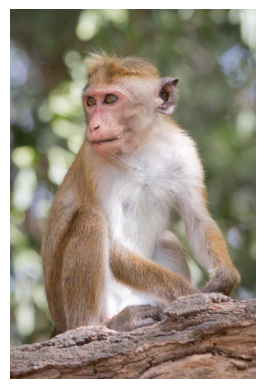
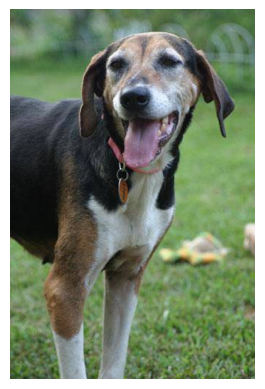
Suppose you want to predict the label of a given image using supervised machine learning. We are using a pre-trained model here to predict labels of new unseen images.
import matplotlib.pyplot as pltfrom PIL import Imageimages =list((DATA_DIR /"test_images").glob("*.*"))
for image_path in images: image = Image.open(image_path).convert("RGB") plt.imshow(image) plt.axis("off") plt.show() predictions = classify_image(image_path)print(predictions.to_string(index=False))print("-"*60)
      Class  Probability score
  tiger cat              0.276
Persian cat              0.275
   Pembroke              0.251
      tabby              0.095
------------------------------------------------------------
       Class  Probability score
     cheetah              0.973
     leopard              0.024
      jaguar              0.002
snow leopard              0.001
------------------------------------------------------------
   Class  Probability score
 macaque              0.873
   patas              0.052
  langur              0.033
capuchin              0.011
------------------------------------------------------------
                     Class  Probability score
               EntleBucher              0.237
Greater Swiss Mountain dog              0.235
                    beagle              0.162
               Appenzeller              0.152
------------------------------------------------------------
Example 3: Text classification with a pretrained language model
A large language model (LLM) is trained on a very large collection of text and can be adapted or prompted for many language tasks. Instead of training a sentiment classifier from scratch on movie reviews, we can start with a pretrained model that has already been fine-tuned to classify text as positive or negative.
Here, a Hugging Face pipeline handles tokenization, model inference, and conversion of the model output into a label and confidence score.
from transformers import pipelinesentiment_analyzer = pipeline( task="sentiment-analysis", model="distilbert-base-uncased-finetuned-sst-2-english",)texts = ["I asked my model to predict my future, and it said '404: Life not found.'","Machine learning is like cooking: sometimes you follow the recipe, and sometimes you hope for the best!",]sentiment_analyzer(texts)
Warning: You are sending unauthenticated requests to the HF Hub. Please set a HF_TOKEN to enable higher rate limits and faster downloads.
The result is one dictionary per text containing a predicted label—here POSITIVE or NEGATIVE—and a score. Notice what changed from the earlier examples: we did not collect and label a new sentiment dataset or fit a model in this notebook. We reused a model trained elsewhere.
NoteWhy isn’t this cell executed while building the book?
The first run downloads the pretrained model. Keeping this example non-executing makes the book build reproducible in offline and resource-constrained environments. You can run it interactively after installing the project dependencies and allowing the model download.
Going beyond the model’s original labels: zero-shot classification
The sentiment model above is restricted to the labels it was trained to predict. Suppose instead that we want to classify text using our own candidate emotion labels—without first providing labeled examples for this particular task. A pretrained model designed for zero-shot classification can score how well each candidate label fits the text.
from transformers import pipelineemotion_classifier = pipeline( task="zero-shot-classification", model="facebook/bart-large-mnli",)text ="I submitted the assignment after weeks of work, and it finally passed every test."candidate_labels = ["sadness", "joy", "love", "anger", "fear", "surprise"]emotion_classifier(text, candidate_labels)
{'sequence': 'I submitted the assignment after weeks of work, and it finally passed every test.',
 'labels': ['surprise', 'joy', 'anger', 'fear', 'sadness', 'love'],
 'scores': [0.4165934920310974,
  0.32989200949668884,
  0.0896255373954773,
  0.06469527631998062,
  0.05273377522826195,
  0.046459924429655075]}
The classifier returns all candidate labels ranked by score. Calling this zero-shot does not mean the model learned from no data: it was pretrained on substantial data, but it was not trained on labeled examples from this exact emotion-classification task.
This flexibility is powerful, but the output is still a prediction, not an objective reading of a person’s internal state. Results depend on the wording, candidate labels, training data, and context available to the model. We still need suitable evaluation data before deciding whether the classifier is useful for a real application.
Example 4: Predicting housing prices
Suppose we want to predict housing prices given a number of attributes associated with houses.
# Predict on unseen examples using the built modelpred_df = pd.DataFrame(# {"Predicted target": model.predict(X_test[0:4]).tolist(), "Actual price": y_test[0:4].tolist()} {"Predicted_target": model.predict(X_test[0:4]).tolist()})df_concat = pd.concat([pred_df, X_test[0:4].reset_index(drop=True)], axis=1)HTML(df_concat.to_html(index=False))
Predicted_target
bedrooms
bathrooms
sqft_living
sqft_lot
floors
waterfront
view
condition
grade
sqft_above
sqft_basement
yr_built
yr_renovated
zipcode
lat
long
sqft_living15
sqft_lot15
345831.740542
4
2.25
2130
8078
1.0
0
0
4
7
1380
750
1977
0
98055
47.4482
-122.209
2300
8112
601042.018745
3
2.50
2210
7620
2.0
0
0
3
8
2210
0
1994
0
98052
47.6938
-122.130
1920
7440
311310.186024
4
1.50
1800
9576
1.0
0
0
4
7
1800
0
1977
0
98045
47.4664
-121.747
1370
9576
597555.592401
3
2.50
1580
1321
2.0
0
2
3
8
1080
500
2014
0
98107
47.6688
-122.402
1530
1357
These examples show that supervised learning can work with many kinds of data and targets. But a problem can be expressed as a prediction task without ML necessarily being the right solution. Problem framing comes first. - Use machine learning when you have a large, complex dataset and the decision rules are unknown, fuzzy, or too complicated to define explicitly. - Pause before jumping in: ML is exciting, but always ask whether you really need it for your problem. - Use rule-based systems when the logic is clear, deterministic, and based on stable rules or thresholds. - Rely on human expertise when problems involve ethics, creativity, emotion, or ambiguity that cannot be formalized easily.
🤔 Eva’s questions
The examples produced predictions, but they also exposed more of the work hidden inside the black box. Eva is now wondering:
How are we exactly “learning” whether a message is spam and ham?
What do you mean by “learn without being explicitly programmed”? The code has to be somewhere …
Are we expected to get correct predictions for all possible messages? How does it predict the label for a message it has not seen before?
What if the model mis-labels an unseen example? For instance, what if the model incorrectly predicts a non-spam as a spam? What would be the consequences?
How do we measure the success or failure of spam identification?
If you want to use this model in the wild, how do you know how reliable it is?
Would it be useful to know how confident the model is about the predictions rather than just a yes or a no?
These are not side questions—they are central to applied machine learning. By the end of the course, you will have a practical framework for answering many of them.
Supervised machine learning workflow
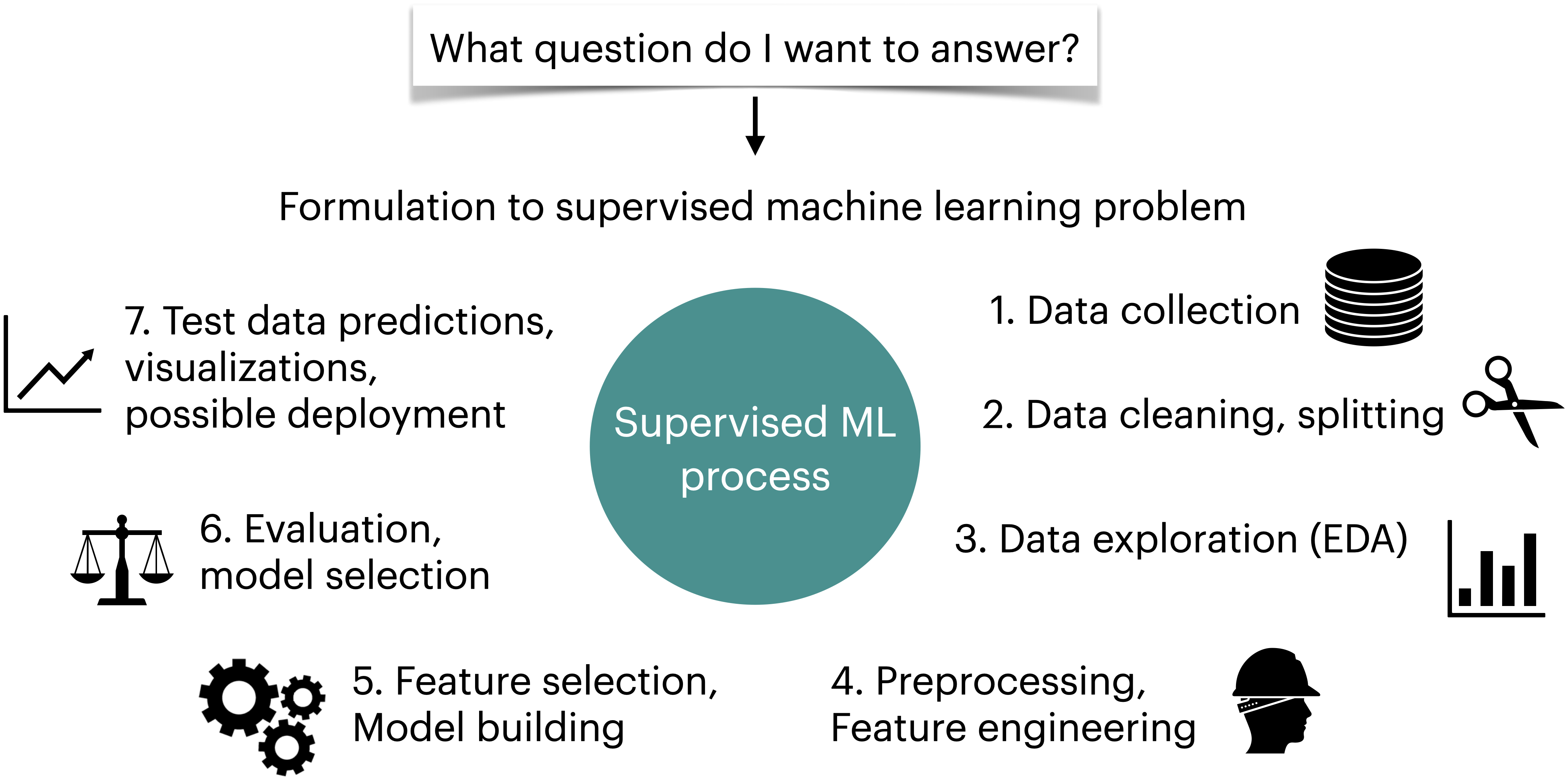
Supervised machine learning is quite flexible; it can be used on a variety of problems and different kinds of data. Here is a typical workflow of a supervised machine learning systems.
A model is only one part of an ML solution. Throughout this course, we will revisit this workflow: frame the problem, examine the data, build and evaluate a model, study its limitations, and communicate what the results do—and do not—support.
Who or what should solve the problem?
Before choosing a model, ask whether the task is better suited to a human, an explicit set of rules, or a system that learns patterns from data.
Best starting point
Example problems
Why?
Human judgment
Giving a student feedback on a personal essay; deciding how to support a patient after a difficult diagnosis; resolving an unusual dispute between two people
The task depends on context, empathy, values, or accountability. There may be no single correct answer.
Rule-based system
Checking whether an email address ends in @student.ubc.ca; calculating sales tax; rejecting a password shorter than 12 characters
The rules are known, stable, easy to state, and should be applied consistently.
Machine learning system
Filtering spam; predicting which songs a listener may enjoy; recognizing objects in photographs
Useful patterns exist in data, but writing complete and reliable rules by hand would be difficult. Some errors are expected.
The boundary is not always sharp. A real system may combine all three: an ML model flags suspicious credit-card transactions, rules automatically block clearly impossible transactions, and a human reviews ambiguous or high-impact cases.
Important
The fact that ML can make a prediction does not mean it should make the final decision. Consider the cost of errors, who is affected, and who should be accountable.
Try framing an ML problem
Think of a problem that might benefit from machine learning. Before choosing an algorithm, discuss these questions:
What would the inputs and desired outputs be?
How is the problem handled now? Are there useful human heuristics or explicit rules?
What data already exist, and what additional data could reasonably be collected?
What kinds of mistakes could the system make, and who would be affected?
Would ML support a person, automate part of the process, or make the final decision?
These questions connect model building to the real-world problem it is meant to address.
❓❓ Questions for you
Exercise 1.1
For each problem, what is the best starting point?
H: human judgment
R: a rule-based system
M: a machine learning system
Classify each problem as H, R, or M.
Checking whether a UBC email address ends with @student.ubc.ca before allowing login
Giving a student constructive feedback on a personal essay
Predicting which songs a listener might enjoy based on their listening history
Calculating the shipping fee from a published table of package weights and destinations
Recognizing which species of bird appears in a photograph
Resolving a disagreement between two project teammates after hearing both perspectives
NoteSuggested answers
R — the condition is explicit and deterministic.
H — good feedback depends on meaning, goals, context, and care.
M — preferences involve complex patterns that can be learned from data.
R — the published table completely specifies the calculation.
M — visual categories are difficult to describe with exhaustive hand-written rules.
H — the task requires context, communication, and accountable judgment.
These are starting points, not universal answers. For example, ML might help retrieve relevant writing examples, but a person should remain responsible for personal feedback.
Summary
The goal of this course is to open the ML black box and learn how to approach real-world problems from framing through communication.
Machine learning is useful when patterns must be learned from data; clear, stable logic may be better handled by explicit rules, and some decisions require human judgment.
In supervised learning, we learn a relationship between observations (\(X\)) and targets (\(y\)), then use it to make predictions for unseen examples.
A trained model is only a prototype component, not a complete solution. We must also evaluate it in context, identify its limitations and possible harms, and communicate what conclusions the evidence supports.