Graphs: Examples and Definitions
Week 12, Wednesday
March 25, 2026
The internet!! (circa 2003)
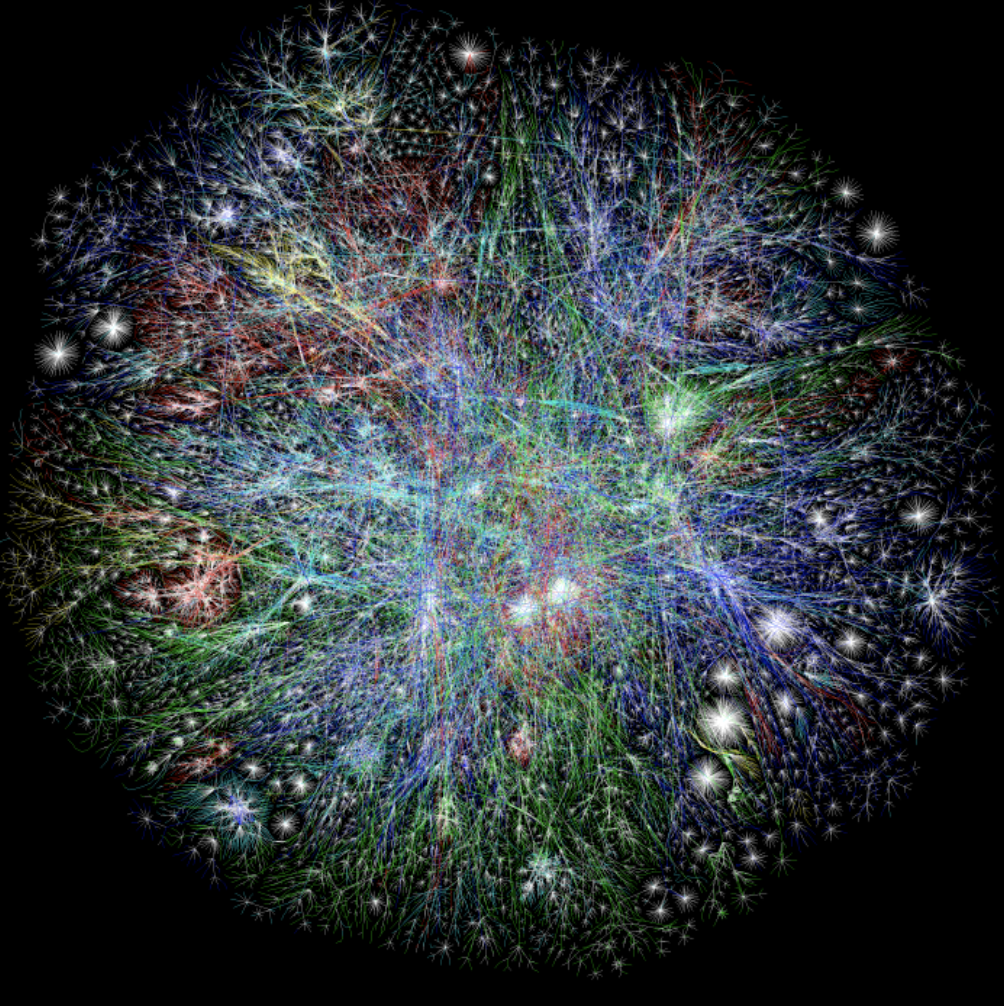
Graph (V,E):
V: ___________________
E: ___________________
Subgraph:
\(G'=(V',E')\) is a subgraph of \(G=(V,E)\) iff \(V'\subseteq V\) and \(E'\subseteq E\) and \((u,v)\in E'\to u\in V'\) and \(v\in V'\).
Degree(v): number of edges that touch vertex v.
Conflict Graph
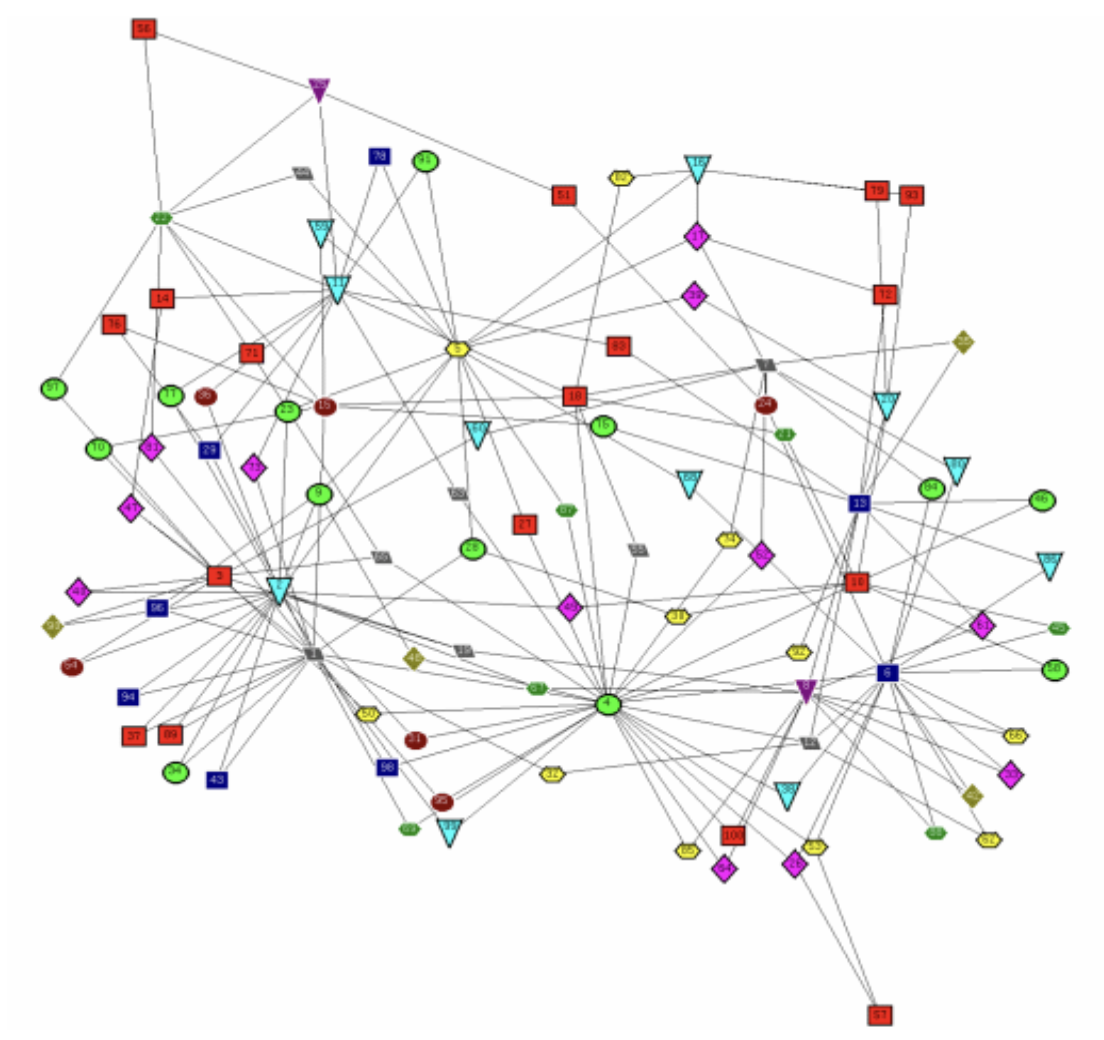
Graph (V,E):
V: ___________________
E: ___________________
Aux: _________________
Adjacent Vertices, N(v): \(\{u:(u,v)\in E\}\)
Incident Edges, I(v): \(\{(u,v)\in E\}\)
Aside: _________________________
State Space Graph
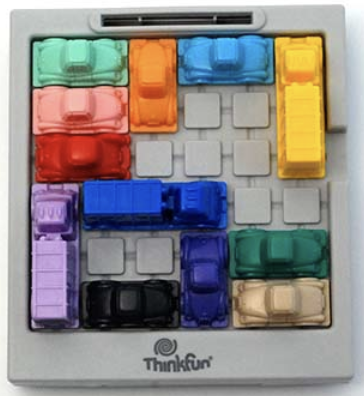
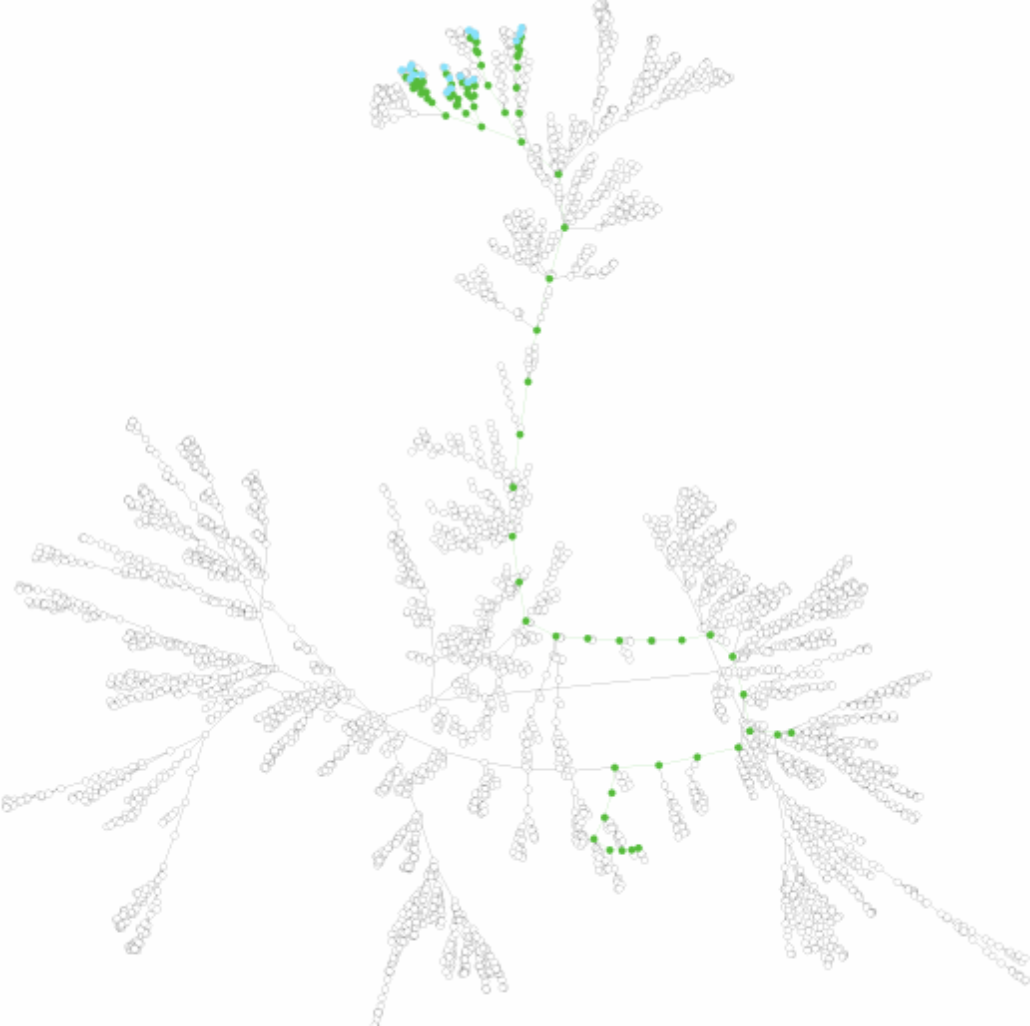
Graph (V,E):
V: ___________________
E: ___________________
Path: sequence of vertices \(\{u_0,u_1,\ldots u_n\}\) where \((u_i,u_{i+1})\in E,\;\forall i\in\{0\ldots n-1\}\)
How do we find solution?
Surface Mesh

Graph (V,E):
V: ___________________
E: ___________________
Aux: _________________
Planar Graph: a graph that can be drawn in the plane with no crossing edges.
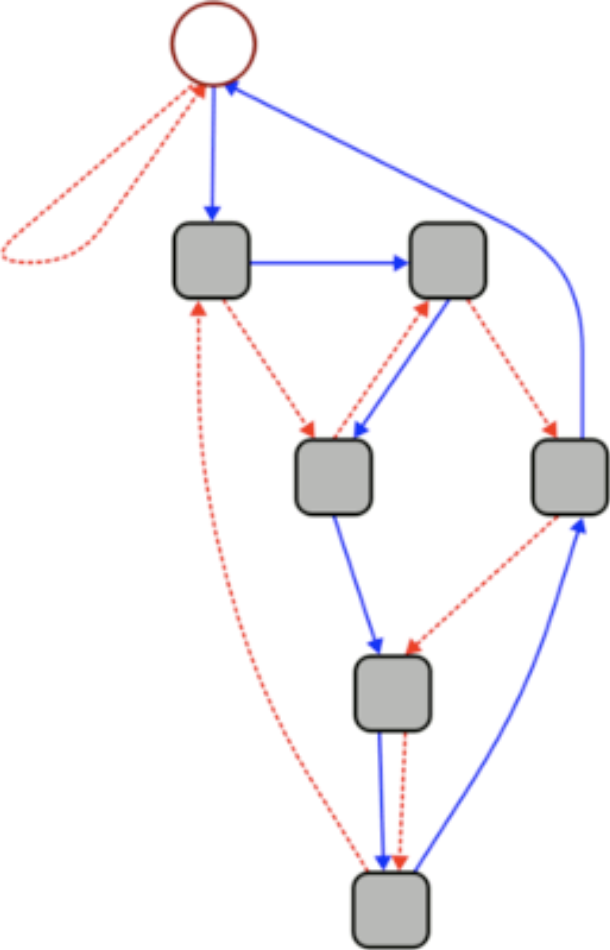
Check Divisibility by 7
- Start at the circle node at the top.
- For each digit \(d\), follow \(d\) blue (solid) edges, followed by 1 red (dashed) edge.
- If you end up at the circle node, your number is divisible by 7.
Example: 3703
Walk: Sequence of vertices between which there are edges
Trail: Walk with no repeated edges
Path(alt): Walk with no repeated vertices
Circuit: Trail that begins and ends in same place
Cycle: Path that begins and ends in same place
Conversation Analysis
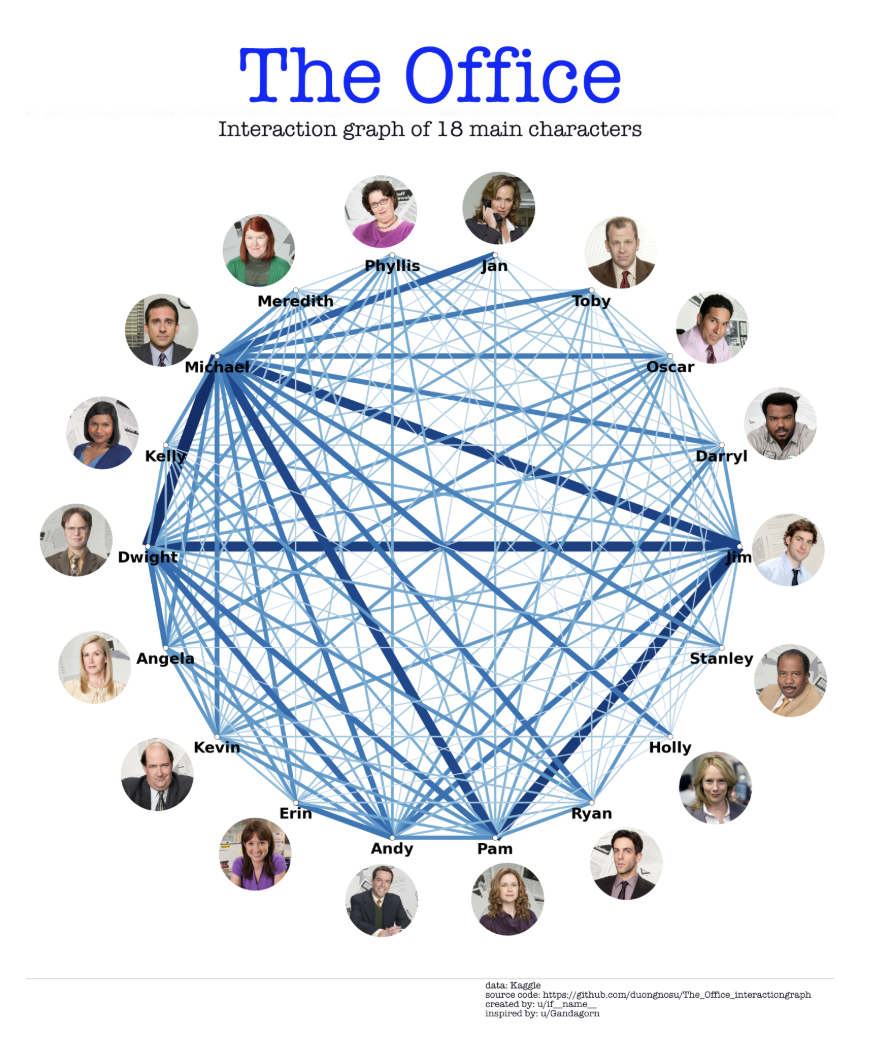
Graph (V,E):
V: ___________________
E: ___________________
Complete Graph:
A graph \(G=(V,E)\) is complete iff \(\forall u,v\in V,\;(u,v)\in E\).
Collaboration Graph
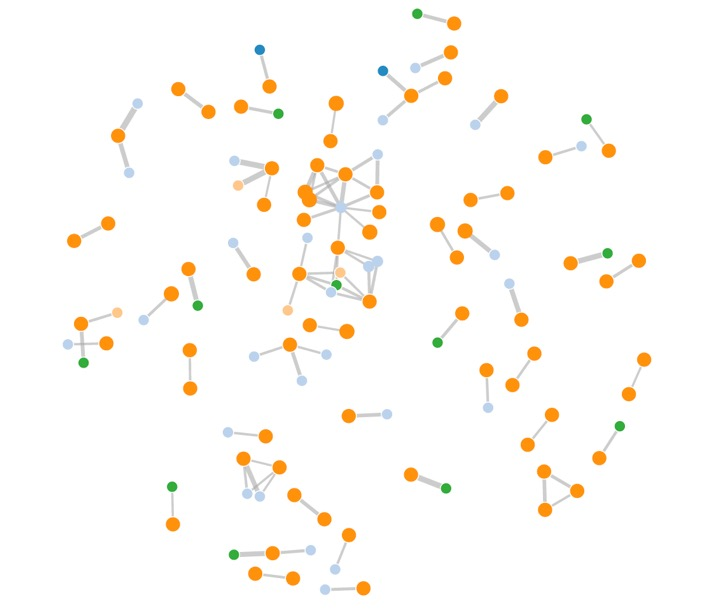
Graph (V,E):
V: ___________________
E: ___________________
Sparse Graph:
\(|E| = O(|V|)\)
Downtown Vancouver
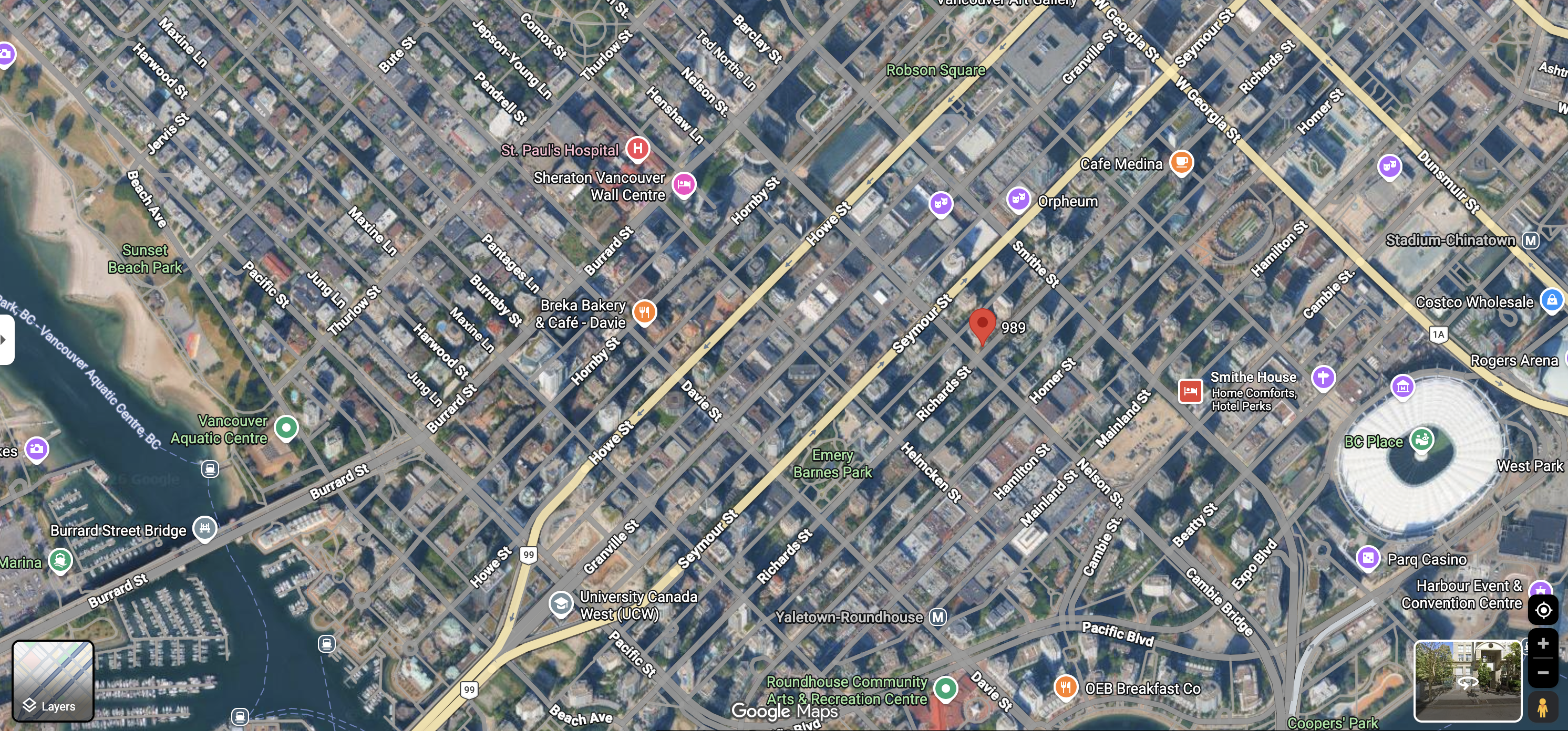
Graph (V,E):
V: ___________________
E: ___________________
Directed Graph: each edge \((u,v)\) is ordered — \((u,v) \neq (v,u)\). Streets like Howe (↓) and Seymour (↑) make this directed.
Weighted Graph: each edge carries a weight \(w(u,v)\) — here, travel time in minutes.
In/Out-degree(v): # edges directed into / out of \(v\). A one-way intersection has in-degree \(\neq\) out-degree.
Fastest route: Seymour & Georgia → Burrard & Helmcken?
Bounds
\(G = (V,E) \qquad |V| = n \qquad |E| = m\)
Running times are often reported in terms of \(n\), the number of vertices, but they often depend on \(m\), the number of edges.
Suppose \(n = 100\) vertices…
Give a lower bound on \(|E|\): ______
Give an upper bound on \(|E|\): ______
Handshaking
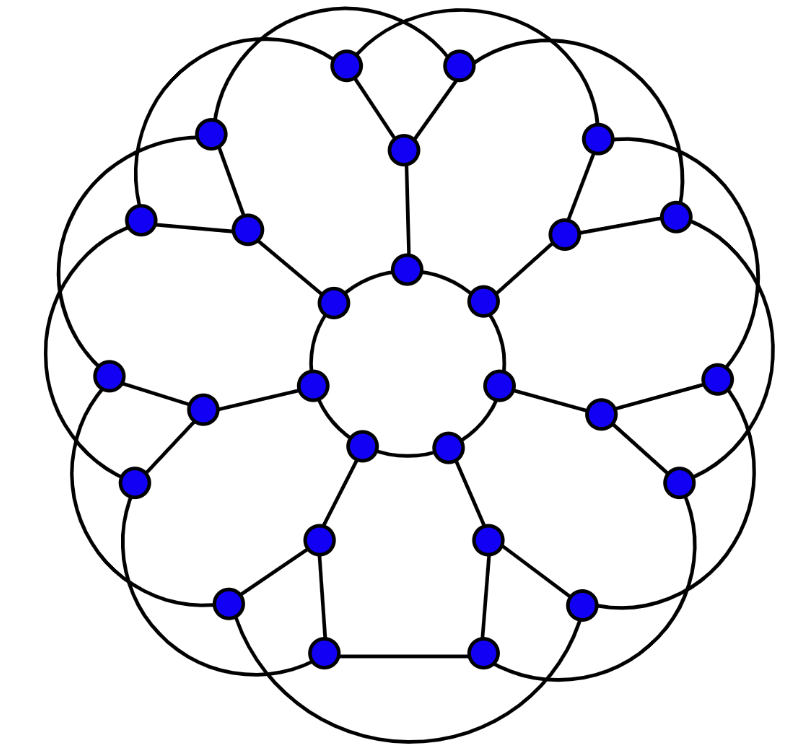
\(G = (V,E) \qquad |V| = n \qquad |E| = m\)
How many edges?
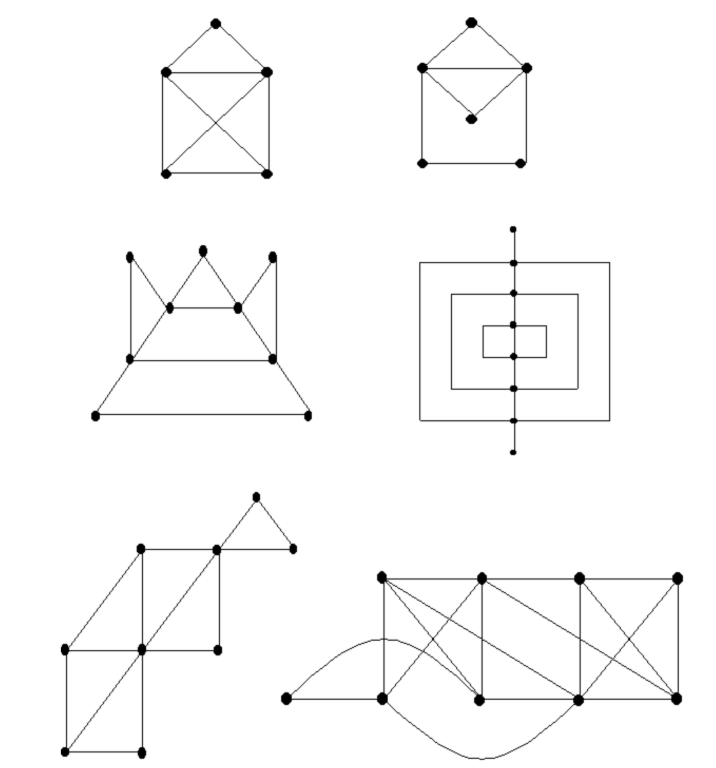
Activity: Pencil Puzzles
You each have a graph. Do these three things:
Try to trace every edge exactly once without lifting your pencil.
Come up with a rule that you can use to determine if a trace is possible.
Devise an algorithm that will find a trace if it exists.
What’s left?
How do we get from here to there? Need:
1. Common Vocabulary
2. Graph implementation
3. Traversal
4. Algorithms.
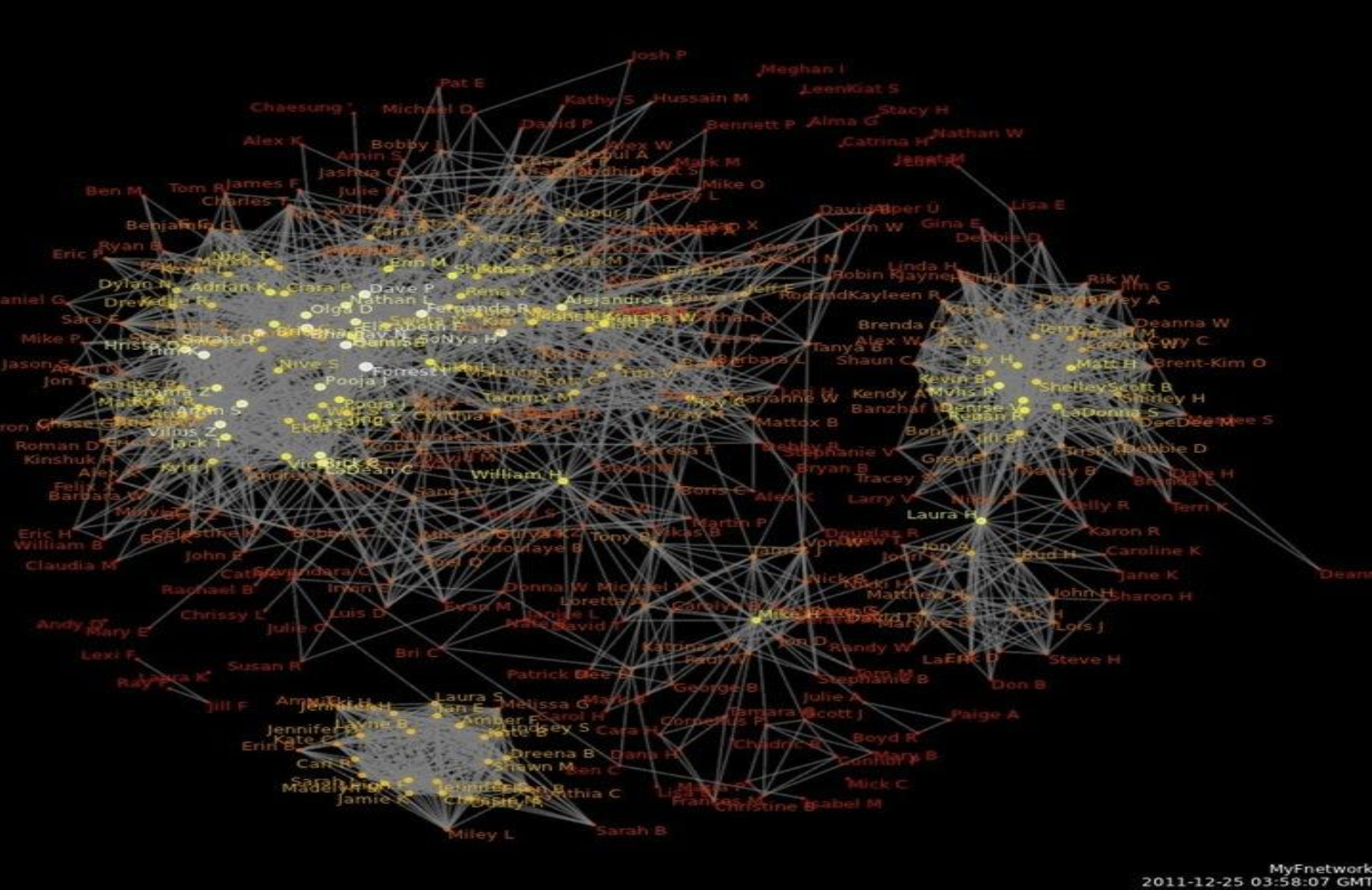
Social Network
Graph (V,E):
V: ___________________
E: ___________________
Connected (sub)graph: a (sub)graph \(G=(V,E)\) is connected if there is a path from \(u\) to \(v\) \(\forall u,v\in V\).
Connected Component: a maximal connected subgraph.
Spanning Tree: connected, acyclic subgraph, containing all the vertices in \(V\).