Week 1, Wednesday
January 7, 2026
Naive search: “Linear” — too slow
Hash lookup: “Constant” — instant
| Database size | Linear search | Hash lookup |
|---|---|---|
| 1,000 | 1 sec | 0.001 sec |
| 1,000,000 | 1000 sec | 0.001 sec |
| 100,000,000 | 27 hours | 0.001 sec |
It’s not just Shazam!
YouTube
800 million videos
Every search: < 0.5 sec
Linear search would take hours
Genomics
Human genome: 3 billion base pairs
Finding a gene sequence
Naive: days → Real tools: seconds
Pandemic response
330 million people
Contact tracing within 2 connections
Relationships grow exponentially
As data grows, bad algorithms become impossible.
Suppose you have two correct algorithms that solve the same problem — which is better?
| 0 | 1 | 2 | 3 | 4 | 5 | 6 | 7 | … | 99,999,999 |
|---|---|---|---|---|---|---|---|---|---|
| 🎵 | 🎵 | 🎵 | 🎵 | 🎵 | 🎵 | 🎵 | 🎵 | … | 🎵 |
Do you have any questions about the Python?
How long does it take to run (in seconds)?
| 0 | 1 | 2 | 3 | 4 | 5 | 6 | 7 | … | 99,999,999 |
|---|---|---|---|---|---|---|---|---|---|
| 🎵 | 🎵 | 🎵 | 🎵 | 🎵 | 🎵 | 🎵 | 🎵 | … | 🎵 |
What factors affect how long find_song_naive takes?
Machine speed
A faster computer runs the same code faster.
Location of song
At the front? Quick!
At the end? Slow.
Not there at all? Slowest.
Size of database
100 songs vs 100 million songs
We want to characterize the algorithm, not the machine or our luck.
What’s a good name?
What’s a good expression for running time? \(T(n) =\)
What construct do we have that characterizes functions in a way that ignores constants?
\(f(n)\) is \(O(g(n))\) if there exist constants \(c > 0\) and \(n_0 \geq 0\) such that:
\[f(n) \leq c \cdot g(n) \quad \text{for all } n \geq n_0\]
\(f(n)\) is \(O(g(n))\) if there exist constants \(c > 0\) and \(n_0 \geq 0\) such that:
\[f(n) \leq c \cdot g(n) \quad \text{for all } n \geq n_0\]
\(f(n)\) is \(\Omega(g(n))\) if there exist constants \(c > 0\) and \(n_0 \geq 0\) such that:
\[f(n) \geq c \cdot g(n) \quad \text{for all } n \geq n_0\]
\(f(n)\) is \(\Theta(g(n))\) iff it is both \(O(g(n))\) and \(\Omega(g(n))\).
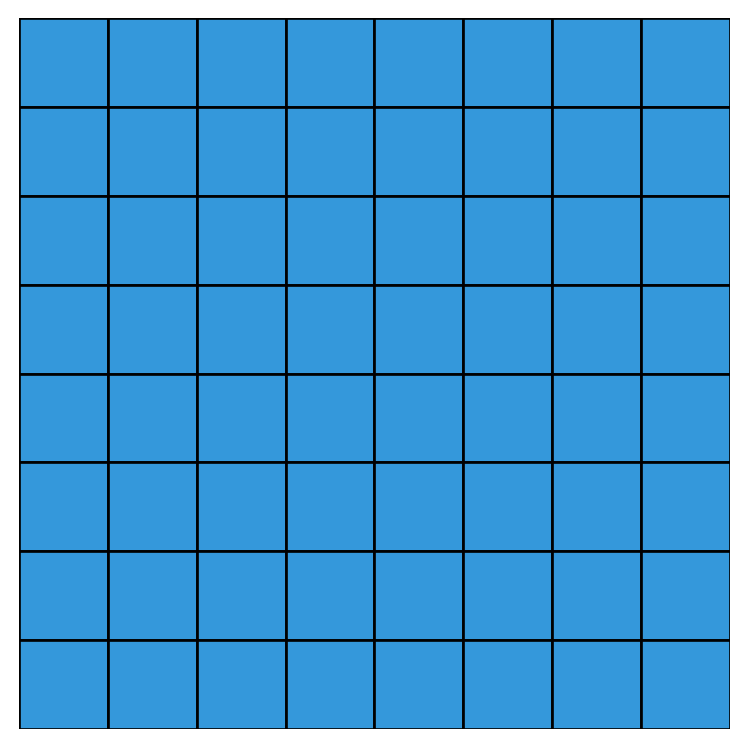
For \(n = 6\):
What are the values of i and j for the 17th element counted?
What are the values of i and j for the 32nd element counted?
What’s the Big-O?

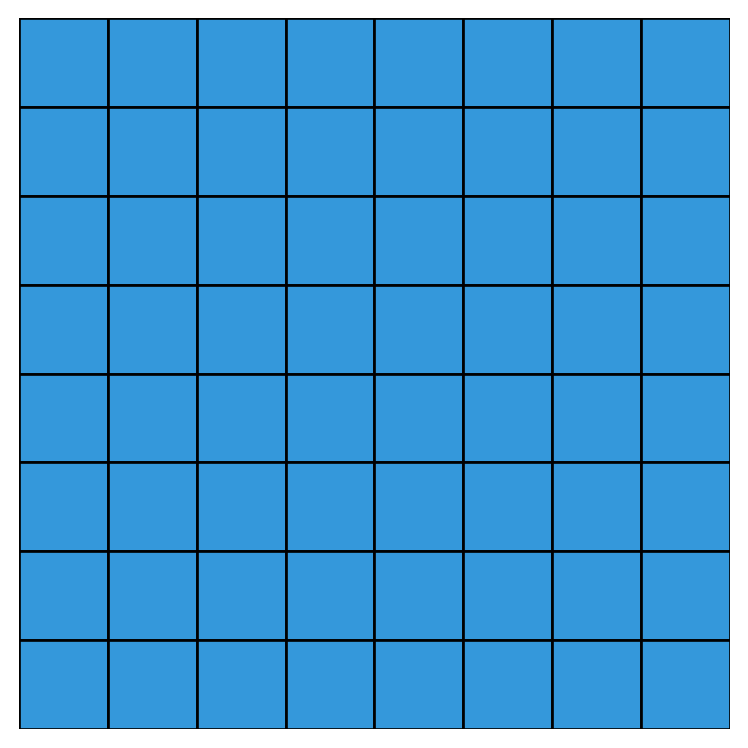
For \(n = 6\):
What are the values of i and j for the 4th element counted?
What are the values of i and j for the 12th element counted?
What’s the Big-O?

\[1 + 2 + 3 + \ldots + n = \frac{n(n+1)}{2}\]
More analysis