Programming, problem solving, and algorithms
CPSC 203, 2025 W1
November 25, 2025
Announcements
Travelling Salesperson Problem
TSP vs SSSP
SSSP: “many one-way routes from home (tree)” vs TSP: “one big round trip through everyone (loop)”
TSP vs SSSP
| Aspect | SSSP (Single-Source Shortest Paths) | TSP (Travelling Salesperson) |
|---|---|---|
| Goal | Shortest route from one start to each vertex | One cheapest tour visiting all vertices and returning |
| Shape | Tree of paths from the source | Cycle through all vertices |
| Must visit all? | No – each path can skip most vertices | Yes – must visit every vertex exactly once |
| Overlap | Paths often share edges | Tour is one sequence; no repeated visits |
| Difficulty | Fast algorithms (e.g., Dijkstra) | NP-hard; exact solution is hard for large graphs |
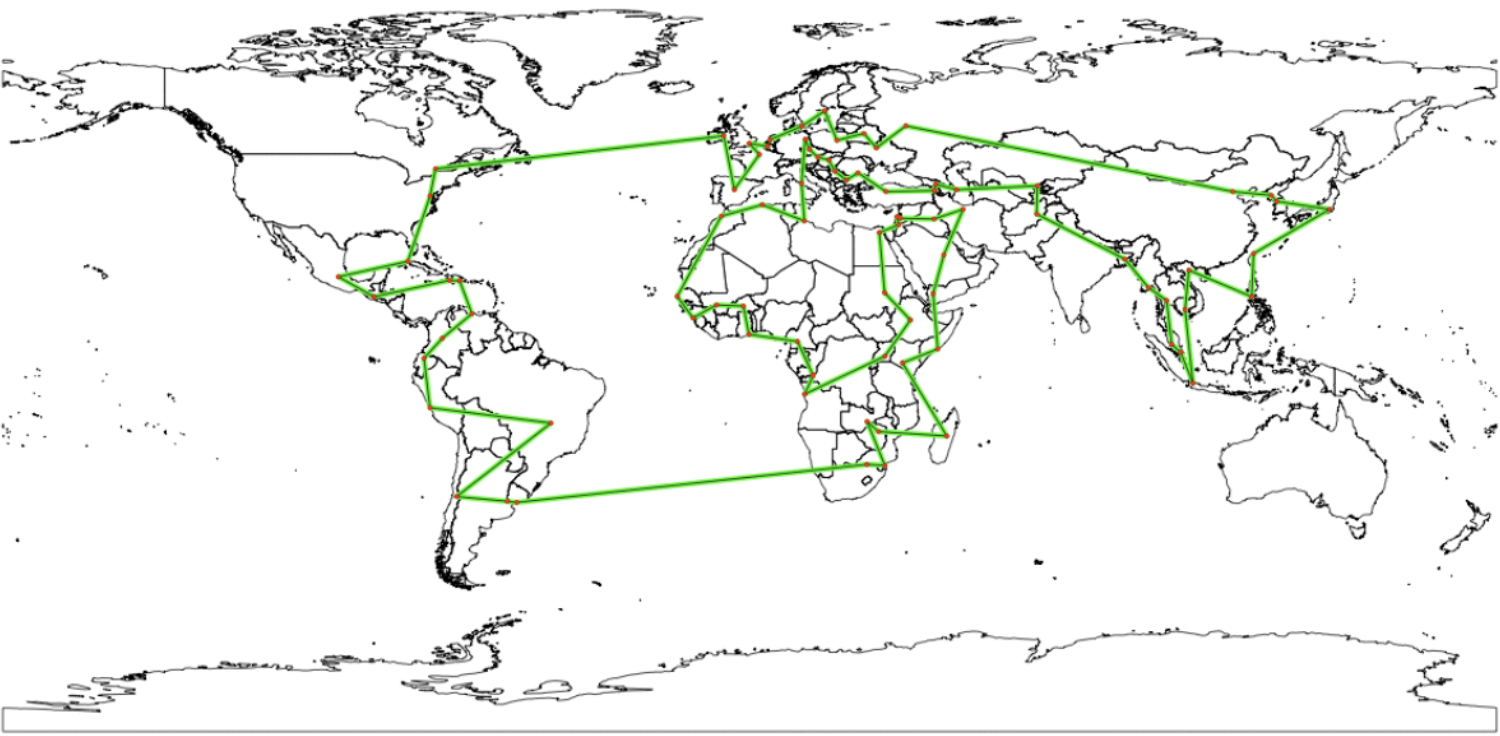
Demo Blog
https://medium.com/data-science/around-the-world-in-90-414-kilometers-ce84c03b8552
Plan for Code
Steps to assemble our solution:
________________________________________
________________________________________
________________________________________
________________________________________
________________________________________
A Technical Detail
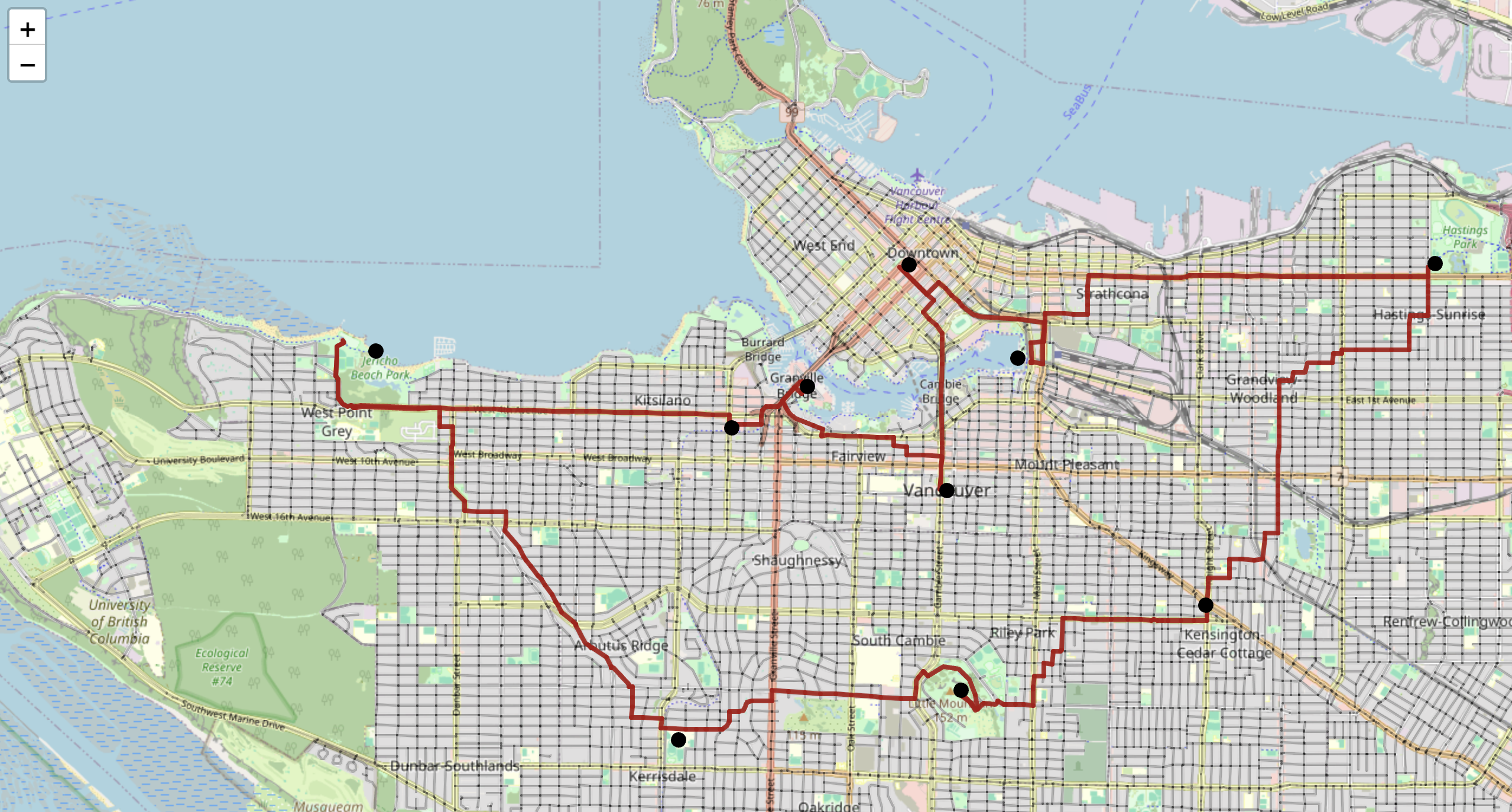
Demo
What Does lambda Do?
Goal: Create a new column (latlong) and fill it with coordinates for each errand in the dataframe.
How it works:
df.apply(..., axis=1): Run a function once for each row.lambda row: ox.geocode(row['errand']): A tiny inline function. Read it as: “Given a row, look up the place name inrow['errand'],geocode it, and return the (lat, lon).”The returned value becomes the entry in the new latlong column.
Why lambda? We only need this function once, so we write it right where it’s used.
Tour Distance
We assemble each candidate solution as an arrangement of all of the errands:
Ex: A D B E F C
How do we find the total distance if we do the errands in the suggested order?
Why This Matters
There are lots of applications:
- 📦 UPS/FedEx/Amazon Delivery Millions saved by reducing even 1km per driver per day.
- 🍔 UberEats/DoorDash/Skip Multi-stop pickup/delivery with time windows.
- 🧬 DNA Sequencing & Genome Assembly Ordering fragments relies on TSP-like reconstruction.
- 🚌 School Bus Routing Minimize buses, fuel, and time while meeting constraints.
- 🧪 Medical Lab Sample Pipelines Robotic arms schedule efficient multi-station workflows.
- ❄️ Snowplow & Garbage Truck Routing Efficiently cover every street in a city.
- 🏭 Factory Robots & CNC Machines Optimizing tool paths reduces waste, heat, and wear.
- ✈️ Airline Crew Scheduling Complex daily routing: crews must return to base, meet rest rules.
- 🌍 City Infrastructure Planning Utility inspections, meter reading, streetlight repair routes.
- 🚑 Ambulance & Emergency Routing Minimize response times; life-critical optimization.