Programming, problem solving, and algorithms
CPSC 203, 2026 W1
November 3, 2026
Today’s Destination: Markov Chains (MCs)
- Last class we discussed graphs as a new data type.
- Entities were represented by nodes.
- The relationship between the entities was represented by edges between nodes.
- Markov chains (or Markov processes) are a model for systems which evolve probabilistically.
- MCs can be represented as a graph
- The nodes are the current state of the system.
- The edges capture the probabilistic evolution to the next state.
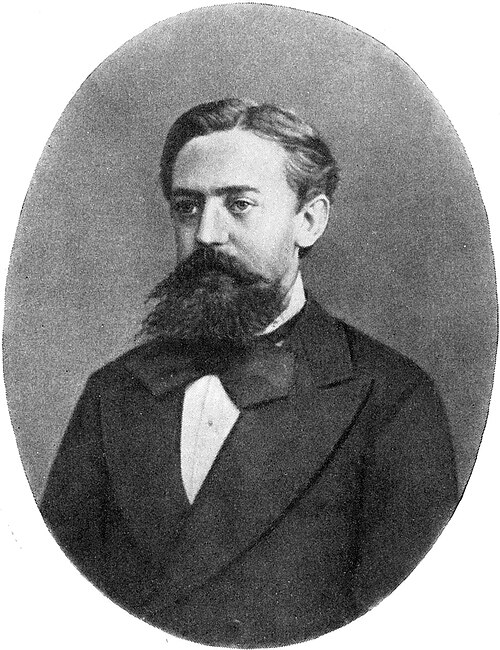
Following Ada
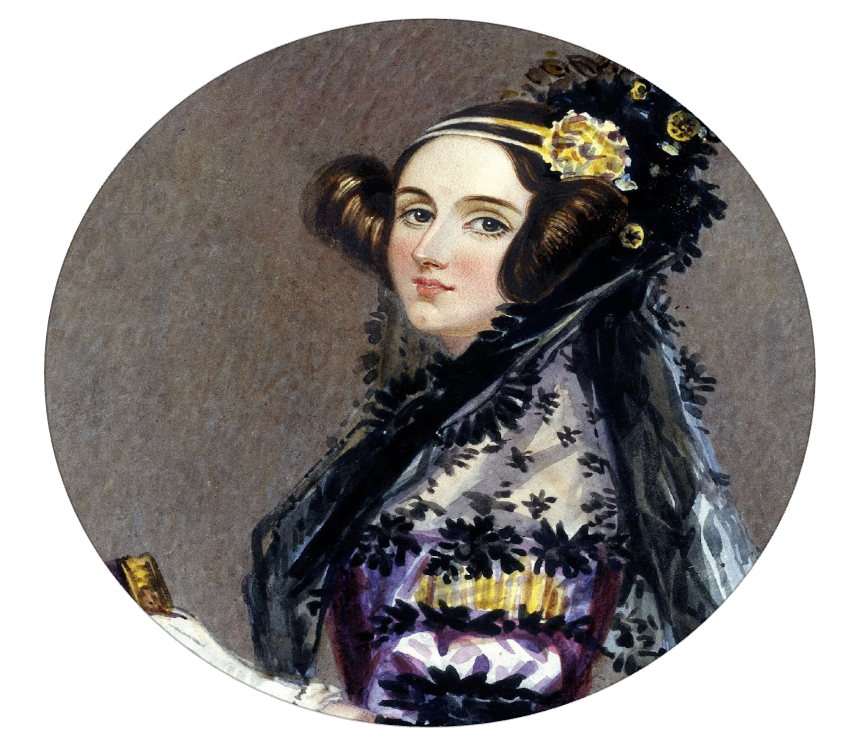
Supposing, for instance, that the fundamental relations of pitched sounds in the science of harmony and of musical composition were susceptible of such expression and adaptations,
the engine might compose elaborate and scientific pieces of music of any degree of complexity or extent.
(Ada Lovelace – 1842)
Prelude
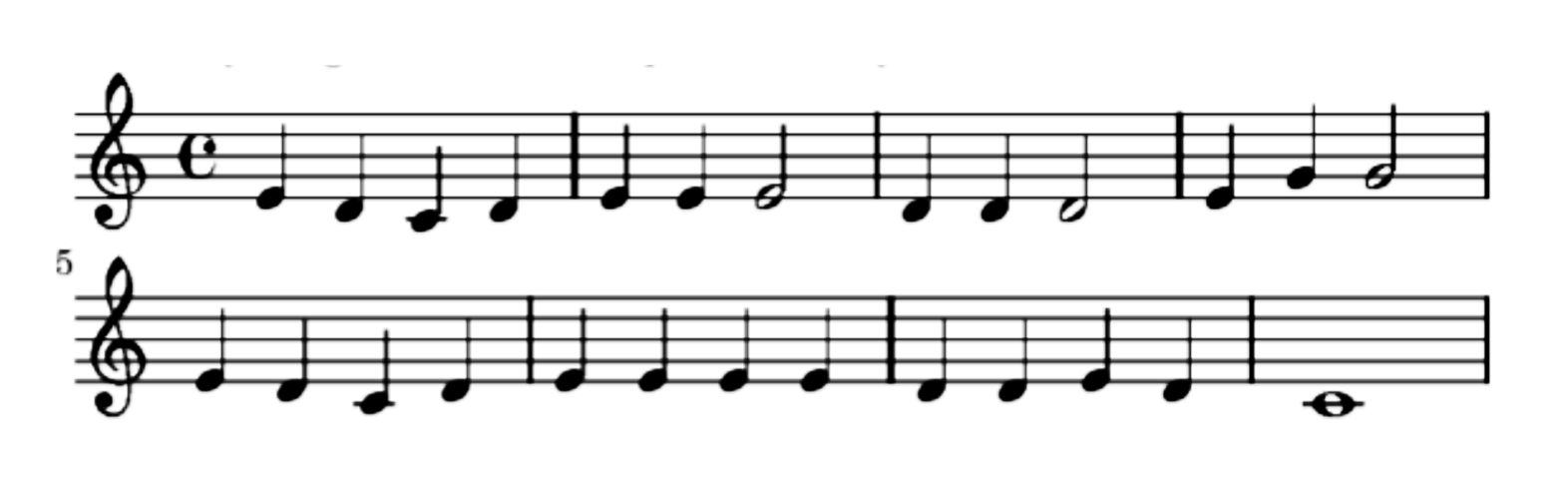
Note Probabilities
| Note | Count | Prob |
|---|---|---|
| C | 3 | 0.12 |
| D | 10 | 0.38 |
| E | 11 | 0.42 |
| G | 2 | 0.08 |
| total | 26 | 1.00 |
Note Transition Probabilities
| C | D | E | G | |
|---|---|---|---|---|
| C | 0 | 2 | 0 | 0 |
| D | 3 | 3 | 4 | 0 |
| E | 0 | 5 | 5 | 1 |
| G | 0 | 0 | 1 | 1 |
| C | D | E | G | |
|---|---|---|---|---|
| C | 0.00 | 1.00 | 0.00 | 0.00 |
| D | 0.30 | 0.30 | 0.40 | 0.00 |
| E | 0.00 | 0.45 | 0.45 | 0.10 |
| G | 0.00 | 0.00 | 0.50 | 0.50 |
Visualizing the Markov Chain
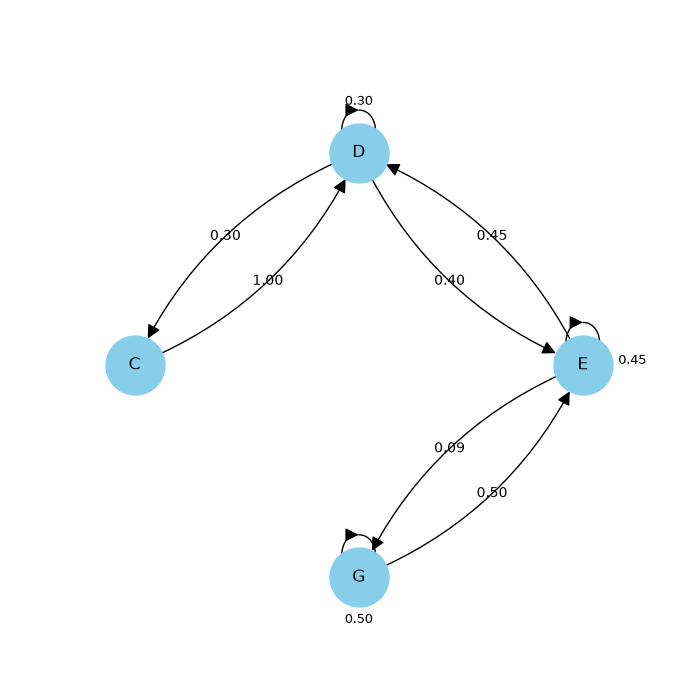
- Transition table / matrix is a representation of an MC model.
- Alternative representation using directed graph:
- Each node is a state of the model.
- Each directed edge is labelled with the probability of the corresponding transition.
| C | D | E | G | |
|---|---|---|---|---|
| C | 0.00 | 1.00 | 0.00 | 0.00 |
| D | 0.30 | 0.30 | 0.40 | 0.00 |
| E | 0.00 | 0.45 | 0.45 | 0.10 |
| G | 0.00 | 0.00 | 0.50 | 0.50 |
Aside: Adjacency Matrix Representation of a Graph
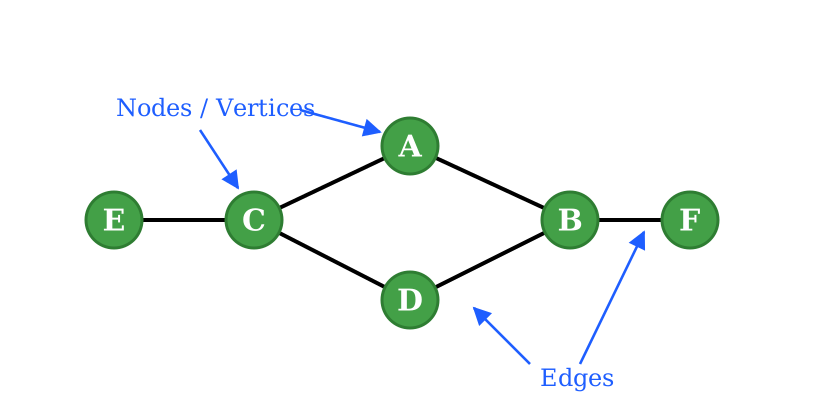
\(G = (V,E)\)
\(V = \{ A, B, C, D, E, F \}\)
\(E = \{ (E,C), (C,A), (C,D), (A,B), (D,B), (B,F) \}\)
| A | B | C | D | E | F | |
|---|---|---|---|---|---|---|
| A | 0 | 1 | 1 | 0 | 0 | 0 |
| B | 1 | 0 | 0 | 1 | 0 | 1 |
| C | 1 | 0 | 0 | 1 | 1 | 0 |
| D | 0 | 1 | 1 | 0 | 0 | 0 |
| E | 0 | 0 | 1 | 0 | 0 | 0 |
| F | 0 | 1 | 0 | 0 | 0 | 0 |
Building a Song
- Randomly choose a start note and put it in a list.
- For the remaining 25 notes:
- Generate a new note from the MC based on last note.
- Put the new note in the list.
- Play the list of notes (using existing rhythm).
| C | D | E | G | |
|---|---|---|---|---|
| C | 0.00 | 1.00 | 0.00 | 0.00 |
| D | 0.30 | 0.30 | 0.40 | 0.00 |
| E | 0.00 | 0.45 | 0.45 | 0.10 |
| G | 0.00 | 0.00 | 0.50 | 0.50 |