Programming, problem solving, and algorithms
CPSC 203, 2026 W1
November 5, 2026
Reminder: Rush Hour Game
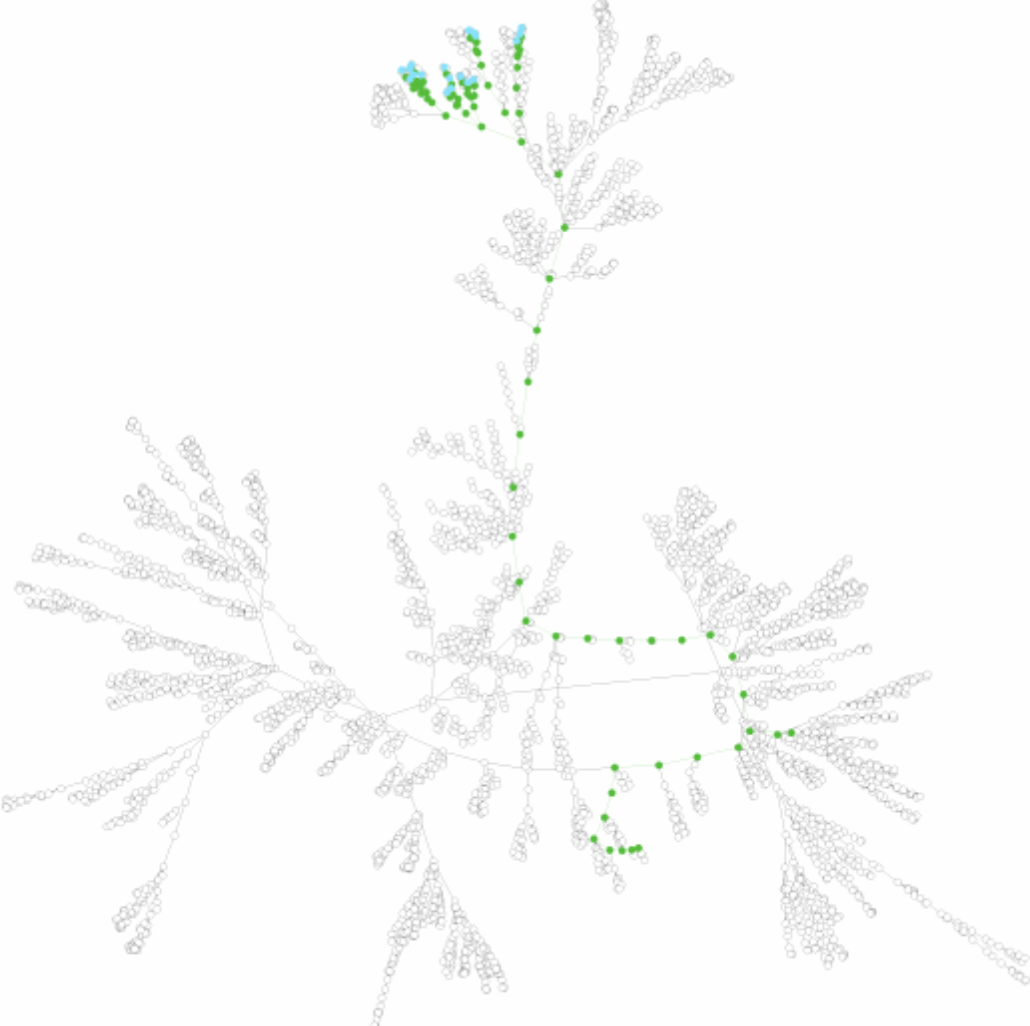
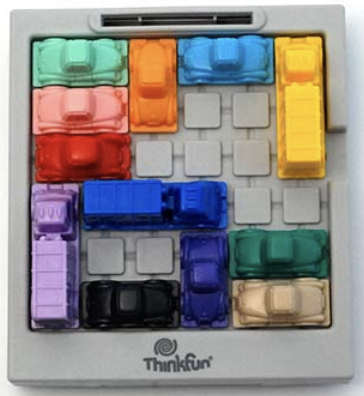
- \(V\): State of the board / position of all cars / configuration.
- \(E\): Connect two configurations if there is a legal move between them.
- Path is a sequence of legal moves, hopefully leading to a winning configuration.
Game Graphs: Tic-Tac-Toe
Two players take turns marking a cell in a 3 x 3 grid.
- Traditionally, the marks are
XandO, andXgoes first.
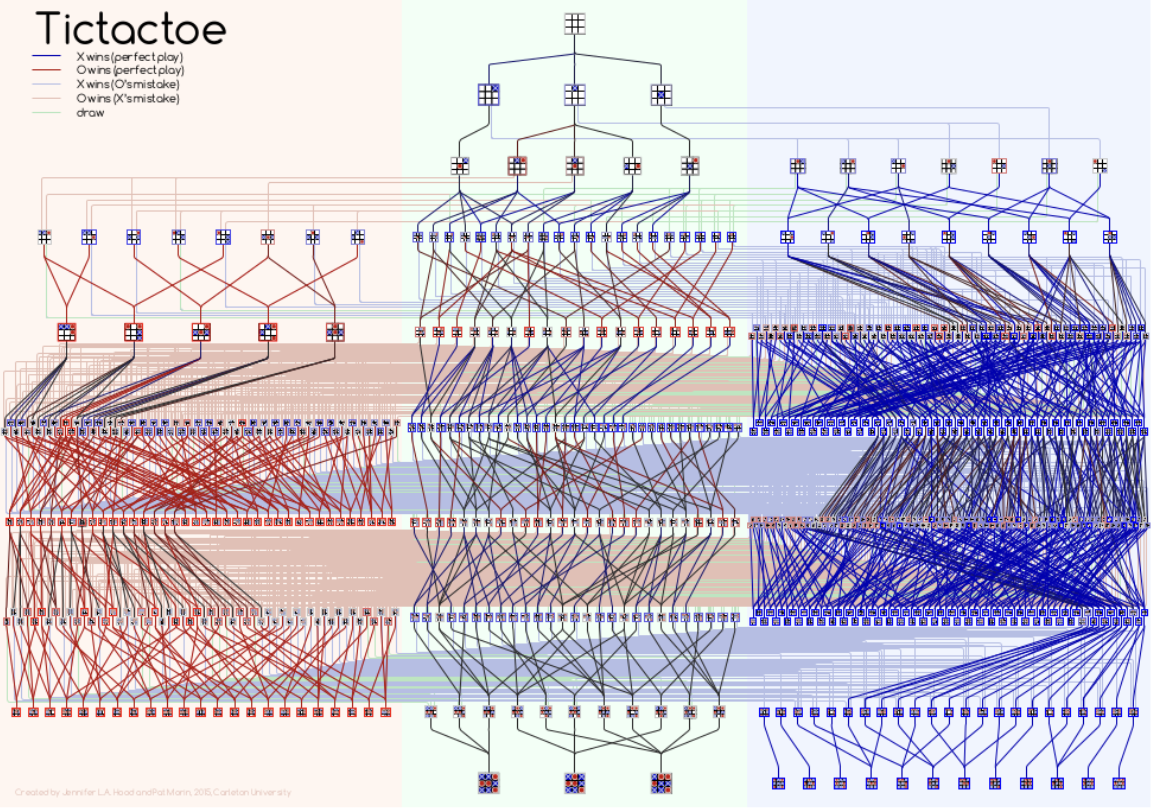
How might we represent a state?
- How many possible states are there?
- What about symmetry?
- Given a state, what moves are available?
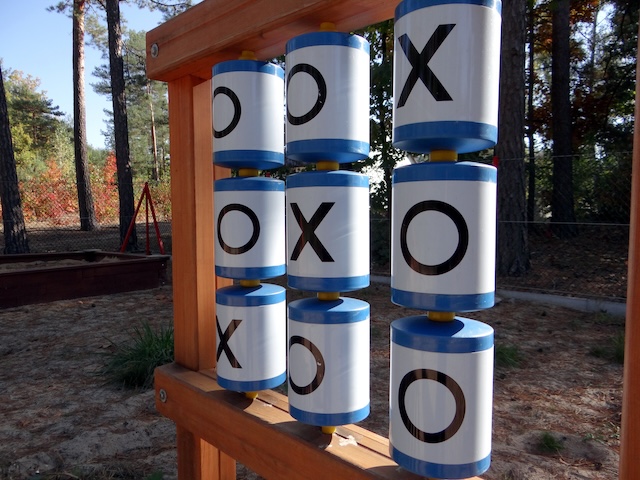
photo by Przemysław Czopor
TicTacToe State Space Graph
Sudoku
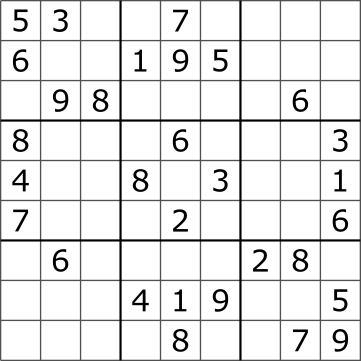
- Fill in the grid with the numbers 1 to 9.
- No number may appear twice in a row, column, or 3x3 subgrid.
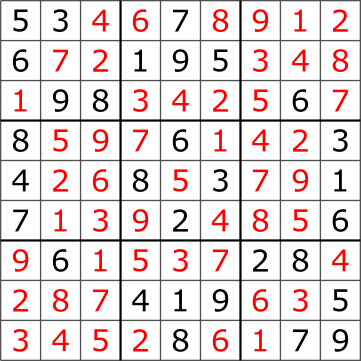
solution to example
[By en:User:Cburnett - CC BY-SA 3.0, Link]
Representing Sudoku
For an evolving system (typically Markovian):
- A state is the current status or configuration of the system.
- The state space is the set of all possible states.
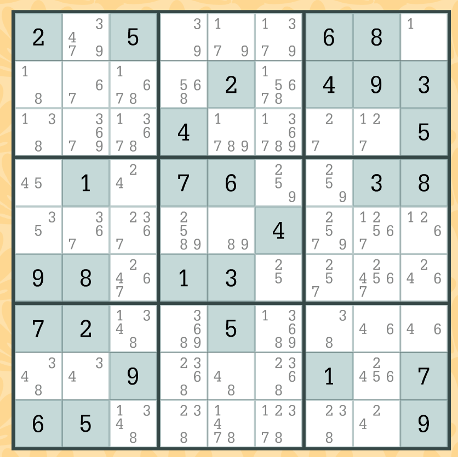
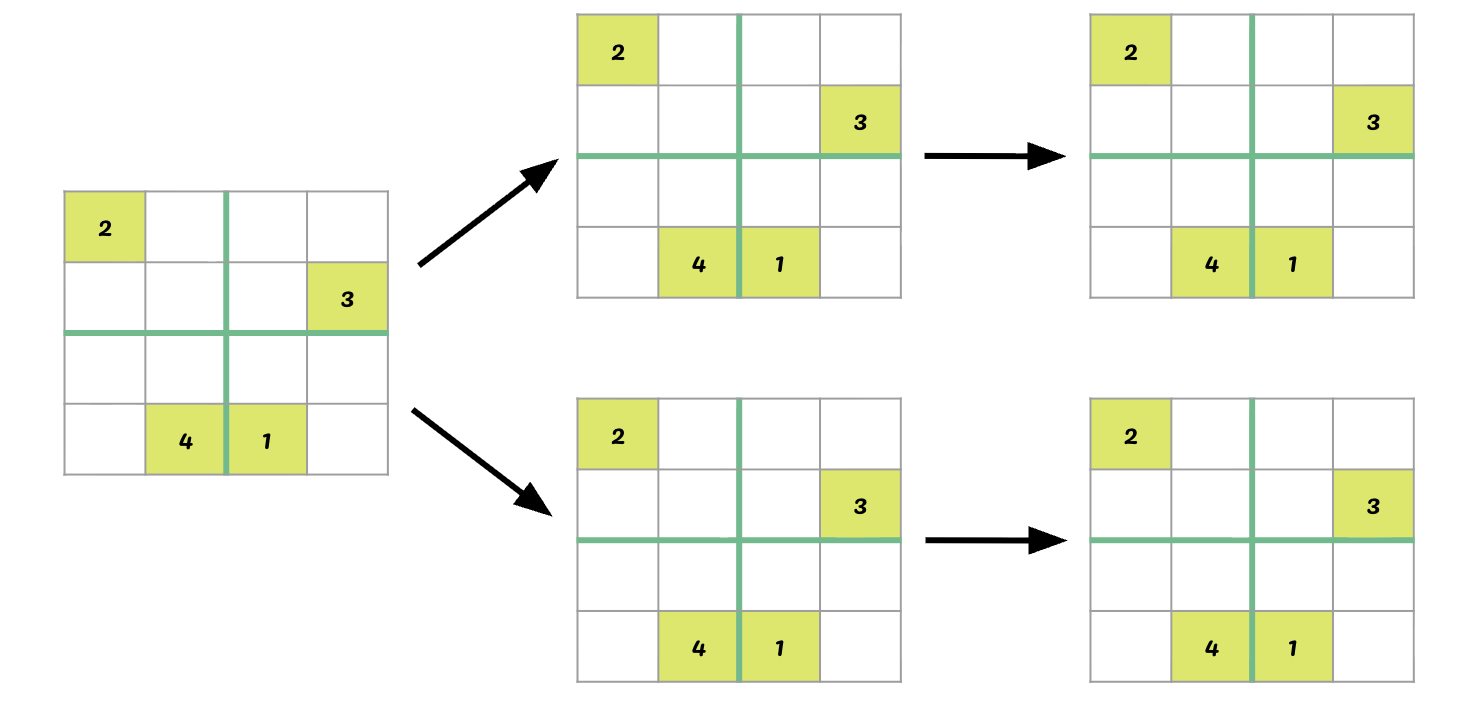
How might you represent this Sudoku state?
State Space Graphs
- A vertex is a (valid) state.
- Edges connect states if there is a valid move between them.
How many neighbors does this vertex have?
Exploring the Sudoku Graph
- Given a vertex, we need to choose a neighbour vertex to consider.
- Choose an empty cell, build set of possible consistent values, choose one.
- Choose an empty cell, choose a value, see if next state is valid.
Reminder: Flood Fill Pattern
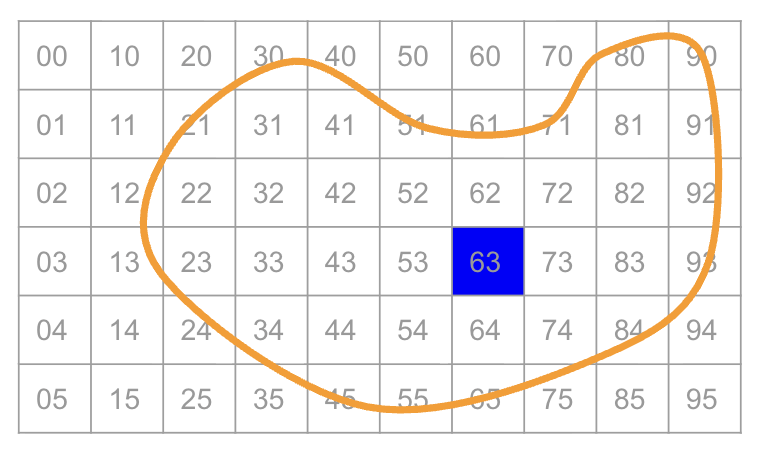
- enqueue a starting point
- while the queue is not empty:
- v = dequeue
- for each valid neighbor w of v:
- process w
- enqueue w
Breadth First Search (BFS)
- Explores a graph starting from a root node.
- Explores all nodes at a specified depth (distance from the root) before exploring any at the next depth.
Other animations of BFS
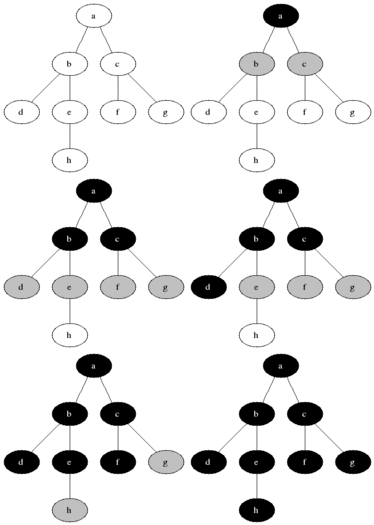
[By Blake Matheny, CC BY-SA 3.0]

Depth First Search (DFS)
- Explores a graph starting from a root node.
- Fully explores each subgraph before moving on to the next node at the current depth.
Other animations of DFS
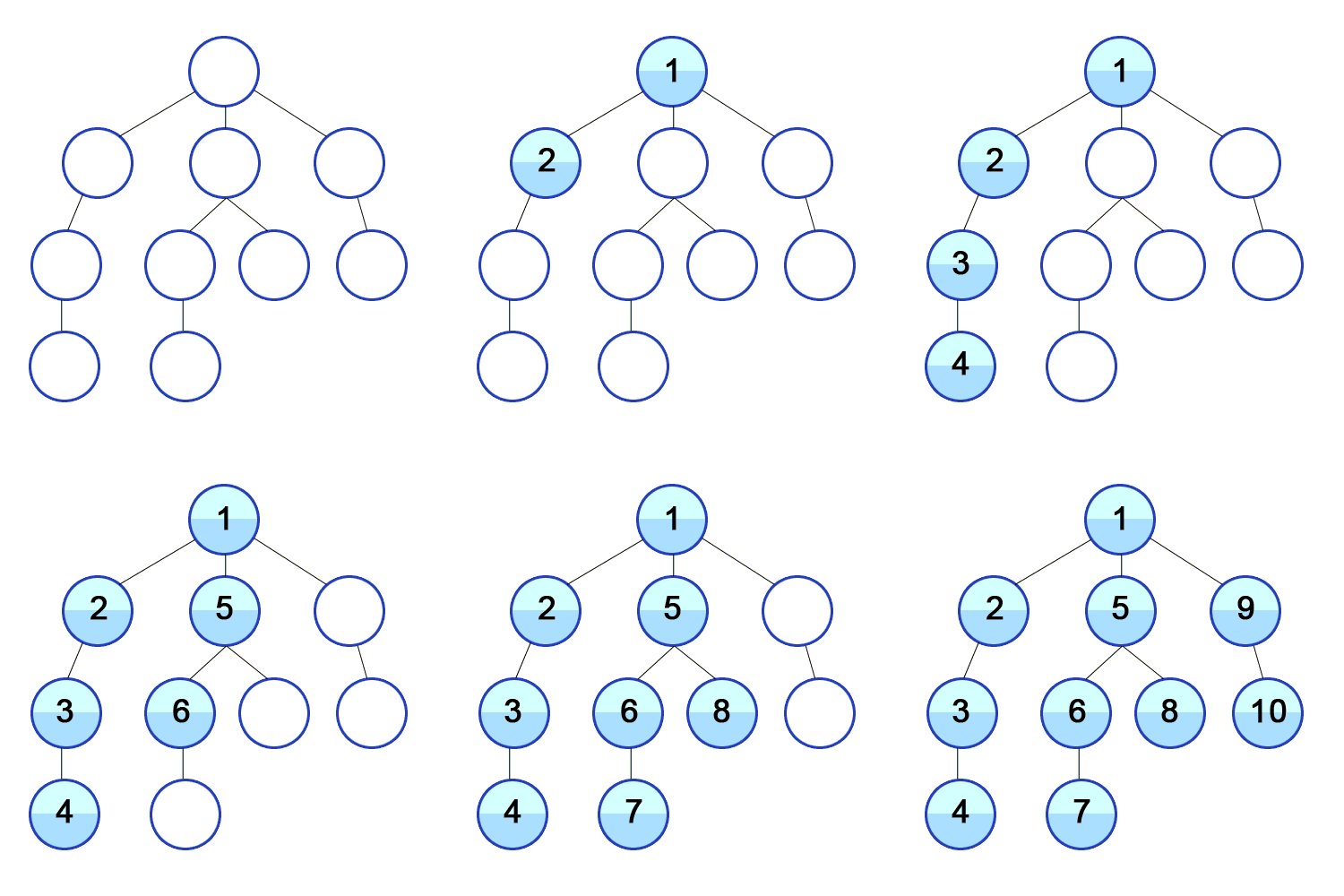
[By Mre, CC BY-SA 3.0]

Implementing DFS
- Can be implemented via recursion.
- We will use a stack / LIFO queue.

Pseudo-code stack functions:
- Insert: push(item)
- Remove: pop() \(\rightarrow\) item
Python deque (or list) functions:
- Insert:
append(item) - Remove:
pop()\(\rightarrow\)item
Sudoku Solver Algorithm
- Search (DFS) through the states until you can’t go any farther.
- If the board is complete, you win!
- If the board is invalid, back up and try a new state in the most recent cell possible.
State Validity
Need to be able to check whether a state is valid.
Suppose we have a variable grid, representing the board, and we want to place a value called num, in position (x,y).
Need to check uniqueness in:
- row
- column
- block
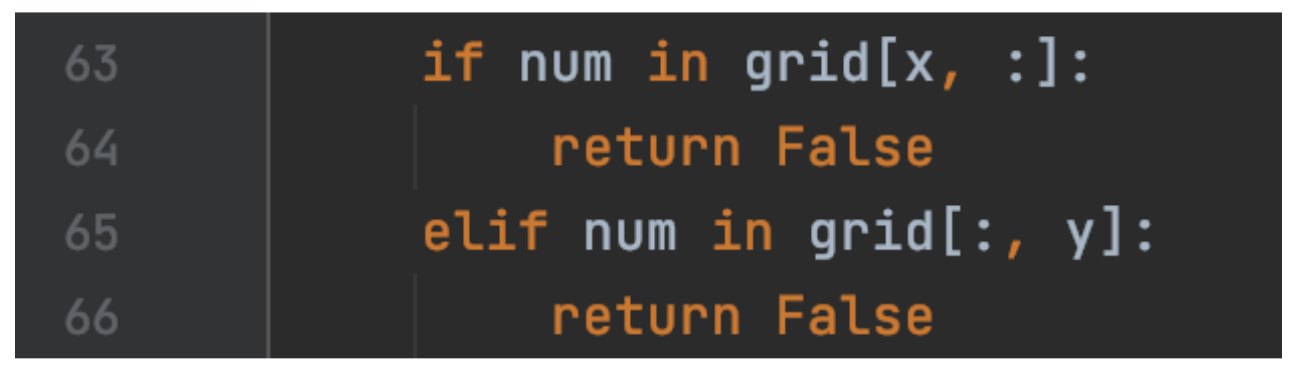
- Which conditional checks a row?
- Which conditional checks a column?
- How shall we check a block?
Block Validity
Python tidbit: to query a region in a 2d matrix, define the bounds on the region and use in.
In the small example below, 2 in grid[0:2,0:2] returns True.
Defining Blocks
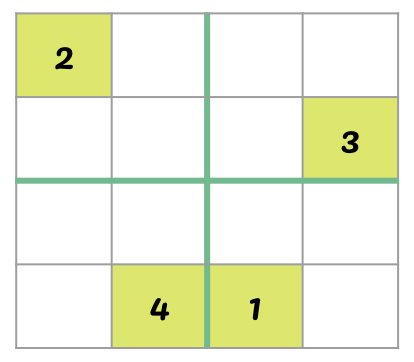
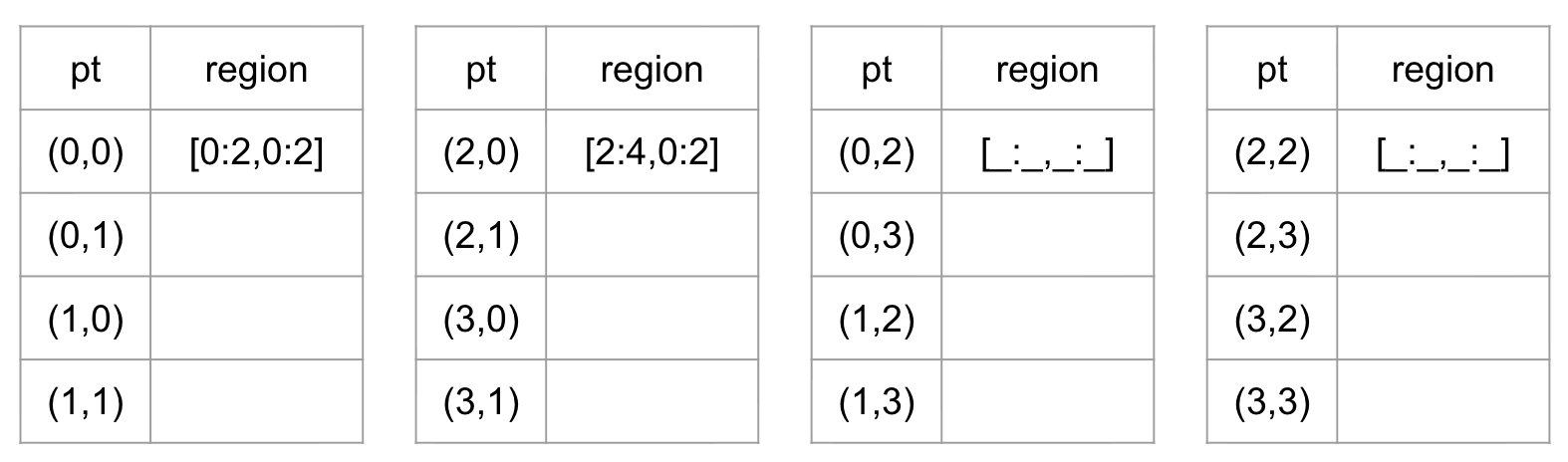
Given location \((x,y)\), determine the block in which it lives.
- a region
s:tcontains \(x\) if \(s\leq x< t\). - Look for a pattern in the tables below for a \(4 \times 4\) grid.
- Can we generalize to an \(r^2 \times r^2\) grid?
- Hint:
x//ris the integer part ofx/r.
- Hint:
Linearizing the Cell Index
Write a function postup that takes an integer position p as input, and returns an (x,y) position. The grid is size \(\times\) size.
Sudoku Closing Thoughts
How fast does the state space grow as board size grows?
| size | cells | state space |
|---|---|---|
| 2 | 4 x 4 | |
| 3 | 9 x 9 | |
| 4 | 16 x 16 | |
| 5 | 25 x 25 | |
| \(r\) | \(r^2\) x \(r^2\) |
Could we be smarter about what values to consider?