Programming, problem solving, and algorithms
CPSC 203, 2025 W2
January 22, 2026
Announcements
Your current toolkit
- Representation — how we encode meaning (binary, types, RGB)
- Collections — how we group things (lists, tuples, dicts)
- Control flow — how we make decisions and repeat (if/else, loops)
- Functions — how we name and reuse logic
- Abstraction — how we hide complexity
- Efficiency — how we measure cost (summations, timing analysis)
Every problem we solve uses some combination of these.
The pattern: learn a new tool, use it to solve a harder problem.
Today: dataclasses → bracelets
Data Classes
Defining our own types
So far we’ve used built-in types: int, float, str, list, tuple…
What if we want to represent something more complex?
- A bead with a radius and a color?
- A bracelet with beads arranged in a circle?
- A song with a title and duration?
- A playlist with a name and songs?
Python lets us define our own types using dataclasses.
A bead bracelet
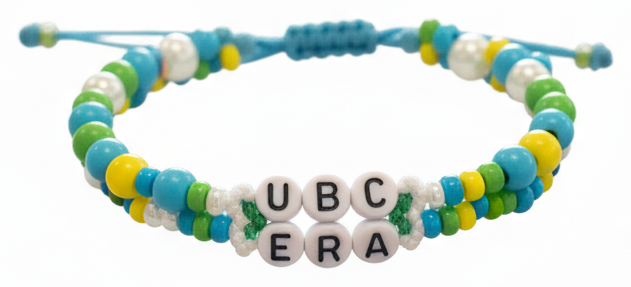
What data describes a bead?
What data describes a bracelet?
Dataclasses in Python
A dataclass bundles related data together into a custom type.
This creates a new type called Bead with two attributes.
Creating Bead objects
What would these print?
02:00
Adding behavior: methods
A dataclass can also have methods.
Adding behavior: more methods
Add a draw method:
Calling methods
Questions?
Now that you know about dataclass how would you design a Bracelet?
The Bracelet
A bracelet contains a list of beads and has a radius.
This is composition: a Bracelet contains Beads.
Creating a Bracelet
Does it fit?
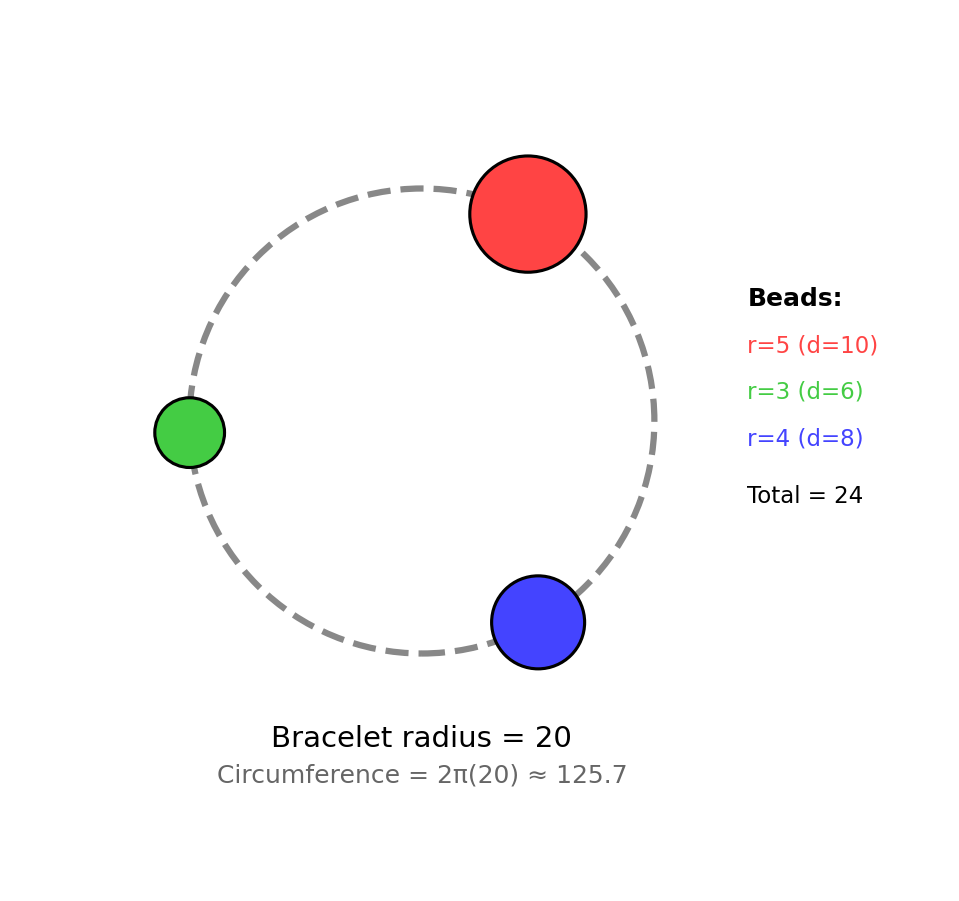
The beads fit on the bracelet if the sum of their diameters is less than or equal to the circumference. We refer to the extra string as slack.
How much slack?
Adding beads safely
We only want to add a bead if it fits!
Drawing the bracelet
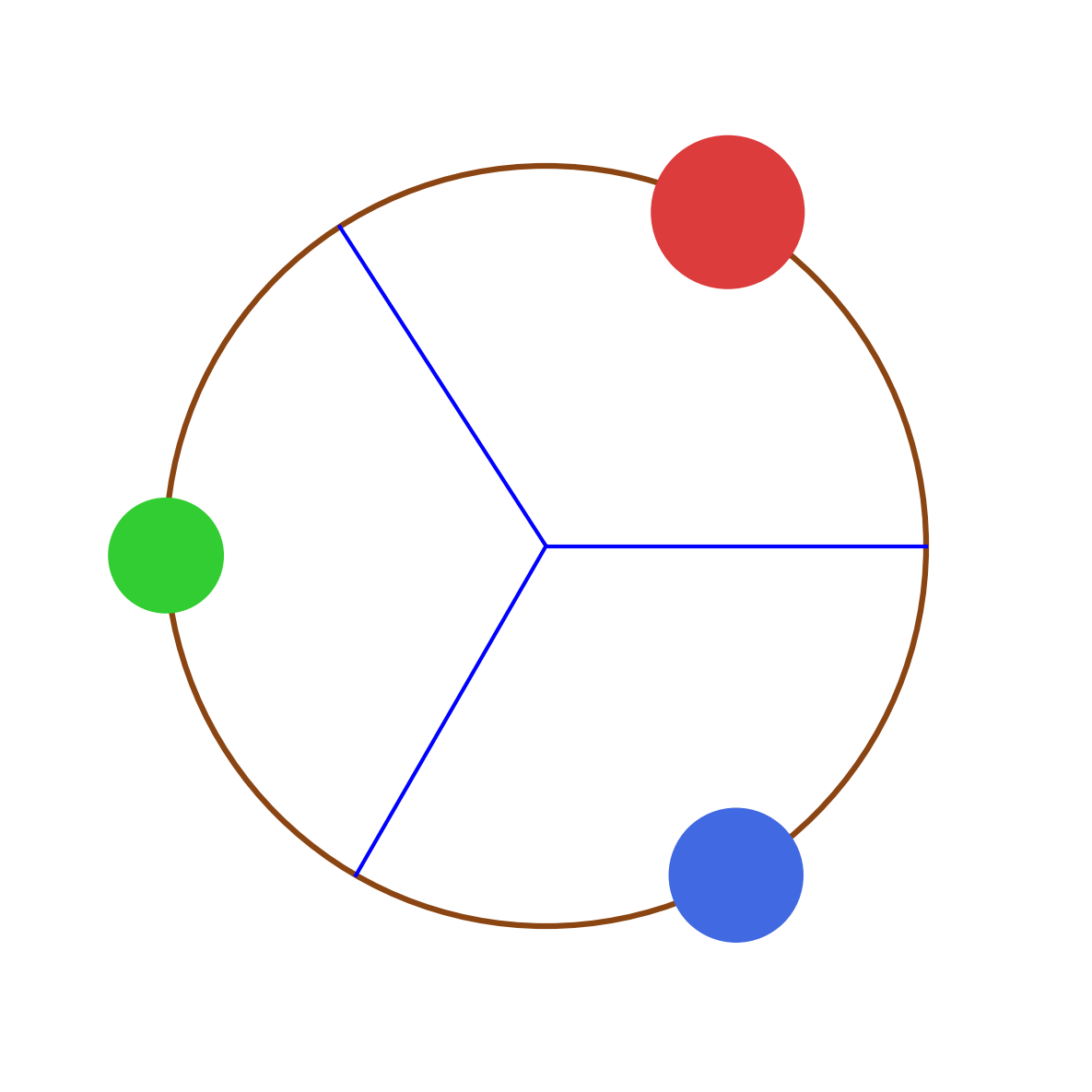
The full picture
@dataclass
class Bead:
    radius: float
    colour: tuple[int, int, int]

    def diameter(self) -> float: ...
    def draw(self, ax, x: float, y: float) -> None: ...

@dataclass
class Bracelet:
    radius: float
    beads: list[Bead]

    def circumference(self) -> float: ...
    def slack(self) -> float: ...
    def string_bead(self, bead: Bead) -> bool: ...
    def remove_bead(self, index: int) -> Bead: ...
    def draw(self) -> None: ...
Try the Bracelet Activity on PrairieLearn!
20:00
Design Strategies
Identify the objects in your problem (nouns)
List the data each object needs (attributes)
List the operations each object supports (methods)
Decide which object is responsible for what
Implement and test incrementally
What you learned
- Dataclasses let us define custom types with attributes
- Methods are functions that belong to a class
- Composition: objects can contain other objects
- Design: who owns what data and behavior matters!